.svg)
Why Does Soap Cost So Differently? The Answer Is in the Oils.
Absolutely, yes. The oils in bar soap matter more than most people realize. Different oils do dramatically different things, and this is the heart of why ingredient choices matter. They are the backbone of every bar, the foundation that determines how it cleans, how it lathers, how it feels on your skin, and whether it actually nourishes or quietly damages over time. I'll break down the oils we use at Private Oaks and why, and I'll explain why we don't use some of the oils you'll commonly find in other soaps.
Organic Virgin Olive Oil
This is the primary ingredient in every Private Oaks bar, and it is the most historically significant soap oil in existence. Olive oil is composed primarily of oleic acid, a monounsaturated fatty acid, but also contains linoleic acid, palmitic acid, stearic acid, vitamins A, E, and K, polyphenols, squalene, and beta carotene.
Oleic acid closely mimics the composition of human sebum, which is the skin's own natural protective layer. Because of this, olive oil deeply hydrates without clogging pores, making it suitable for all skin types including sensitive, dry, acne-prone, and aging skin. The vitamin E and polyphenols are powerful antioxidants that protect against free radical damage and environmental stressors. Its anti-inflammatory properties make it beneficial for people managing eczema, psoriasis, and rosacea. It creates a creamy, skin-nourishing lather and has a low comedogenic rating of 2 out of 5, meaning it is unlikely to clog pores for most people. It does not strip the skin's natural lipid barrier the way synthetic surfactants do. And because oleic acid is stable and resistant to oxidation, olive oil soap has a genuinely long shelf life.
It is not perfect on its own, though, and I want to be honest about that. Pure olive oil soap, known as Castile, produces a small, creamy lather rather than big fluffy bubbles, which can feel underwhelming to people accustomed to commercial soap. At high percentages it requires a very long cure time, sometimes approaching a year, and without adequate curing it can feel slimy on the skin. Olive oil also does not harden a bar on its own, which is why quality soap makers typically combine it with other oils.
That said, Castile soap is the historical proof that simple, plant-based, honest ingredients have always been enough. There was no need for synthetic detergents, SLS, or artificial preservatives. People were cleaning themselves effectively with three ingredients for a thousand years before the industrial soap complex decided otherwise.
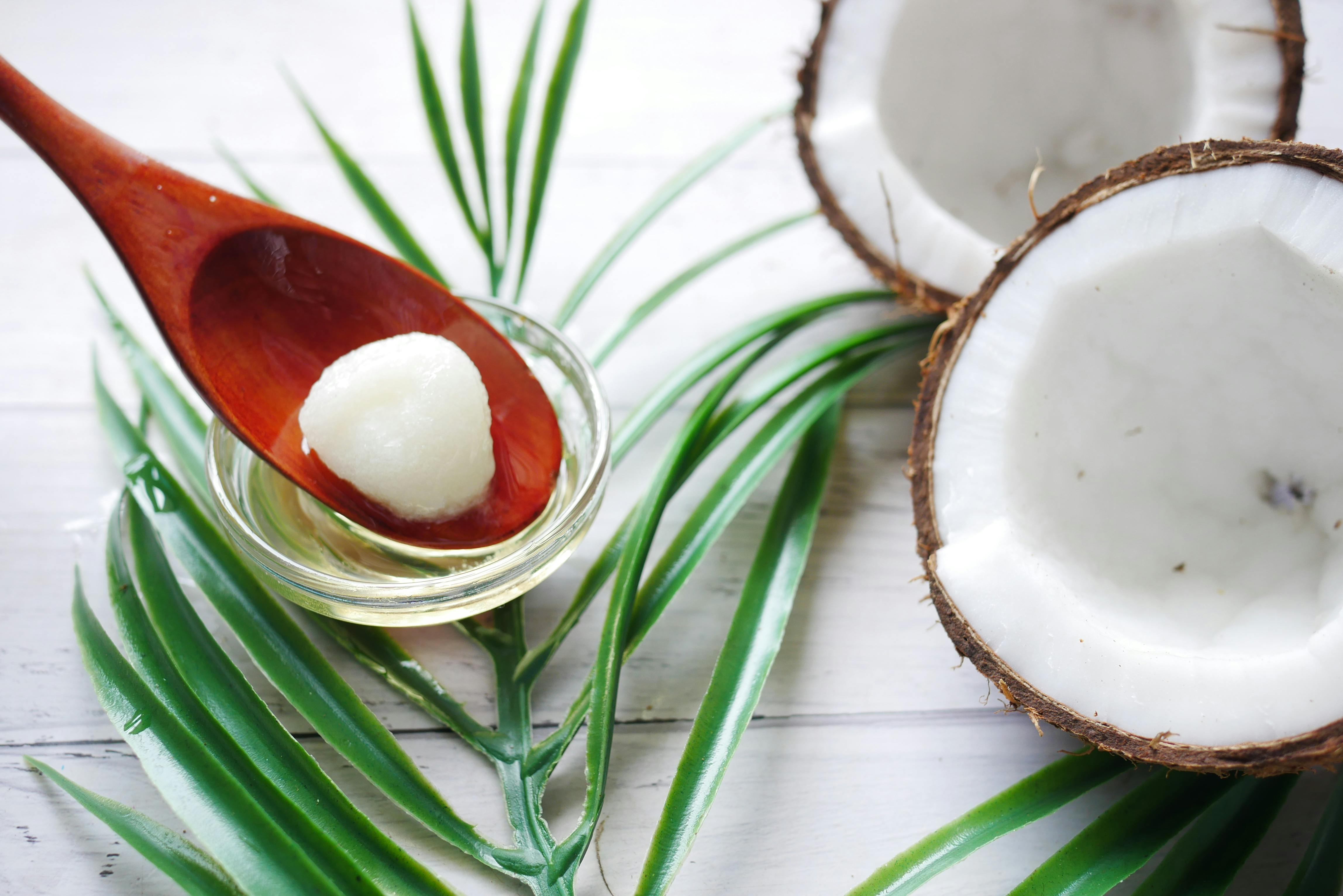
Organic Extra Virgin Coconut Oil
Coconut oil is unusual in the plant oil world because it is dominated by saturated fatty acids rather than unsaturated ones. Lauric acid makes up approximately 45 to 53 percent of its composition, with myristic acid, palmitic acid, caprylic acid, and capric acid making up most of the remainder.
Lauric acid is the primary reason coconut oil is essential in soap making. It is a natural surfactant that creates big, fluffy, abundant lather — the kind most people associate with a satisfying bar of soap. It also has documented antimicrobial and antibacterial properties, and has been shown to be effective against acne-causing bacteria. Coconut oil contributes hardness to the bar, helping it hold its shape and last longer in the shower. The capric and caprylic acids bring their own antimicrobial and skin-conditioning properties. And once saponified, the comedogenic concerns associated with raw coconut oil largely disappear. The soap molecule behaves differently than the raw oil, and since lather is rinsed off rather than left on the skin, pore-clogging is not a meaningful concern for most people.
The downside is real and worth knowing. Too much coconut oil in a formula is the most common cause of overly drying soap. Its powerful cleansing ability can strip the skin's natural oils if the percentage is too high, which is why the ratio in any given formula matters as much as the ingredient itself. This is one of the reasons we are careful about how we balance our oil blend. Coconut oil needs to be present, but it needs to be managed.
Organic Shea Butter
Shea butter is derived from the nuts of the karite tree, native to West Africa, specifically countries like Burkina Faso, Ghana, and Mali, where it has been used for centuries and is sometimes called "women's gold." It contains oleic acid, stearic acid, linoleic acid, and palmitic acid, along with vitamins A, E, and F, and a unique compound called cinnamic acid that gives it documented anti-inflammatory properties.
Shea butter is one of the most intensively moisturizing natural ingredients available. Its fatty acid content restores and maintains the skin's natural lipid barrier, reducing water loss and protecting against environmental stressors. The cinnamic acid is a natural anti-inflammatory that specifically triggers inflammatory cells to slow their production, making shea butter particularly beneficial for people managing eczema, dermatitis, psoriasis, and rosacea. It is non-comedogenic, meaning it will not clog pores despite its rich texture. It promotes collagen production and stimulates cell renewal, giving it legitimate anti-aging properties. Vitamin E provides antioxidant protection. It also adds hardness and longevity to the finished bar, which matters when you are trying to produce something that lasts.
Like olive oil, shea butter has its limitations at high percentages. Too much shea in a formula can leave a soft or draggy bar that does not hold up well in the shower. It also contributes to a creamy rather than bubbly lather, so it needs to be balanced against the more lathering oils in the blend. At the right percentage, though, it earns its place in every bar we make.
The next two oils are not currently part of our formulas, but they are worth understanding because you will find them in many other soap brands. Knowing what they are and what they do helps you read labels with more confidence.
Castor Oil
Castor oil is derived from the seeds of the castor plant and is unlike any other oil used in soap making. It is composed of approximately 85 to 95 percent ricinoleic acid, a unique fatty acid found almost nowhere else in nature. This unusual composition gives castor oil properties that no other oil can fully replicate.
Ricinoleic acid is both a humectant and a lather booster, which is a rare combination. As a humectant it works similarly to glycerin, attracting moisture from the air and holding it against the skin. In the bar, even small amounts dramatically improve lather quality, producing dense, stable, creamy foam with small lotion-like bubbles. It also carries anti-inflammatory and antimicrobial properties. There is really no other oil in cold process soap making that does what castor oil does for lather - it is genuinely in a category of its own. It also boosts the overall conditioning properties of any formula it is part of.
The downsides are manageable but real. Using more than 10 percent in a formula makes the bar sticky and unpleasant to use, so it has to be incorporated carefully. Its thick, viscous texture can accelerate trace in cold process soap, meaning the maker has less time to add fragrances or work swirl designs before the batter thickens too much to manipulate. It also has a shelf life of roughly one year, shorter than most soap making oils.
Palm Oil
Palm oil is derived from the fruit of the oil palm tree, grown almost exclusively in tropical regions, primarily Indonesia and Malaysia. In soap making, palm oil's palmitic acid and stearic acid contribute to bar hardness, a stable creamy lather, and a mild skin feel. It is cheap, shelf-stable, and widely used. Most commercial soap bars contain it, often listed as sodium palmate on the ingredient label.
We believe the positives do not outweigh the negatives, and here is why.
Palm oil does harden bars effectively. It produces a stable, creamy lather, is mild and generally non-irritating, and is inexpensive and easy to source at scale. Those are real advantages, and we are not going to pretend otherwise. But palm oil cultivation is responsible for massive deforestation, primarily in Indonesia and Malaysia, where tropical rainforests, among the most biodiverse ecosystems on Earth, are cleared to make room for monoculture palm plantations. In some regions of Asia, palm oil accounts for nearly half of all deforestation.
The clearing method makes it worse. Much of the land clearing has historically involved slash-and-burn tactics, which not only removes forest but releases enormous amounts of carbon dioxide and other greenhouse gases stored in trees and peat bogs directly into the atmosphere. Palm oil expansion is a documented driver of climate change, not a peripheral one.
The human cost is real as well. Palm oil production has been linked to forced labor, child labor, displacement of indigenous communities, and suppression of workers' rights on some plantations. These are not fringe claims. They are documented by international human rights organizations.
You may have seen "RSPO certified" or "sustainably sourced palm oil" on soap labels. The Roundtable on Sustainable Palm Oil, known as the RSPO, was established in 2004 to certify palm oil produced according to environmental and social standards. RSPO certification does require certified plantations to avoid cutting virgin forests and prohibits slash-and-burn clearing. It includes worker rights protections and environmental management standards, and certified plantations have shown lower deforestation rates than non-certified ones.
The criticism of RSPO, however, is significant and worth understanding. A 2020 satellite analysis found that even RSPO-certified operations continued to contribute to deforestation in Sumatra and Borneo. Greenpeace and other independent environmental organizations have repeatedly documented RSPO members sourcing from suppliers actively engaged in deforestation. The certification itself has four tiers, including structures called "mass balance" and "book and claim" that allow certified and non-certified palm oil to be mixed together in supply chains. Critics argue this undermines the entire premise of certification. Only about 12 percent of global palm oil production carries RSPO certification, and even within that group, compliance and enforcement are inconsistent.
"Sustainably sourced palm" is a marketing claim that deserves scrutiny. The RSPO is better than nothing. But independent organizations have documented ongoing harm even from certified sources, and we are not comfortable building our products on that uncertainty.
The hardness and stability that palm oil provides can be achieved through shea butter, coconut oil, and extended cold process cure time. That path costs more. It takes longer. It requires more patience and precision.
It is also the honest one.
The oils in every Private Oaks bar were chosen for what they do for your skin, where they come from, and what they do not cost the environment. The bars take longer to make. They cost more per ounce to produce. They require a minimum 45-day cure. None of those things are the easy choice. But easy was never the point.
Learn more about the ingredients we use on our Ingredients page and in this blog What Clays and Salts Actually Do to Your Skin.
If you want to understand more about the broader chemical landscape behind ingredient choices, this blog goes deep on exactly that.
For a deeper look at the skin science behind why these oil choices matter, including what a double board certified dermatologist says about gentle cleansers and the skin microbiome, read our dermatologist blog.