.svg)
My Story: How a Nebraska Farm Kid Started a Soap Company
My Story
I grew up in the country outside of a small town in south central Nebraska called Kenesaw. Clayton, who's from a smaller town a few miles away, and I were classmates from pre-school all the way through graduation. I played sports my entire childhood — soccer, baseball, basketball, and wrestling growing up, then football, wrestling, and track in high school. When I wasn't competing I was outside, riding my bike around town with friends or at the local pool. And when I wasn't doing any of that, I was working on the farm with my parents and grandparents.
As I got older and stronger, my parents demanded more of me on the farm. They also demanded a lot of me in the classroom. I wasn't just an athlete. I was a studious kid who genuinely loved reading, math, and science. I graduated at the top of my class, though with only 24 of us that's not saying as much as it sounds. Still, it earned me a full academic Regents Scholarship to the University of Nebraska, where I earned a degree in Business Management.
Finding My Way
I worked at Menards all through college, learning two educations simultaneously, one in the classroom and one in the workforce. After graduation I sold life and health insurance for a couple of years, splitting time between Nebraska and Jacksonville, Florida. That didn't work out the way I'd intended. It was my first real failure as a business owner, and it was a lesson I wouldn't forget.
I moved back home to work for my parents on the farm. After two years as a hired hand, learning to become a better worker and a better businessman, I partnered with my dad in year three. The years that followed are where I learned what running a business actually means, keeping accounting books, buying equipment, selling grain, understanding fertilizers, chemicals, machinery, soils, and government requirements, and slowly learning how to manage debt and income. After three years of partnership with my father, my older brother wanted to farm, so we created an LLC and began managing most of the land together. My father retired a few years later and handed us another 180 acres.
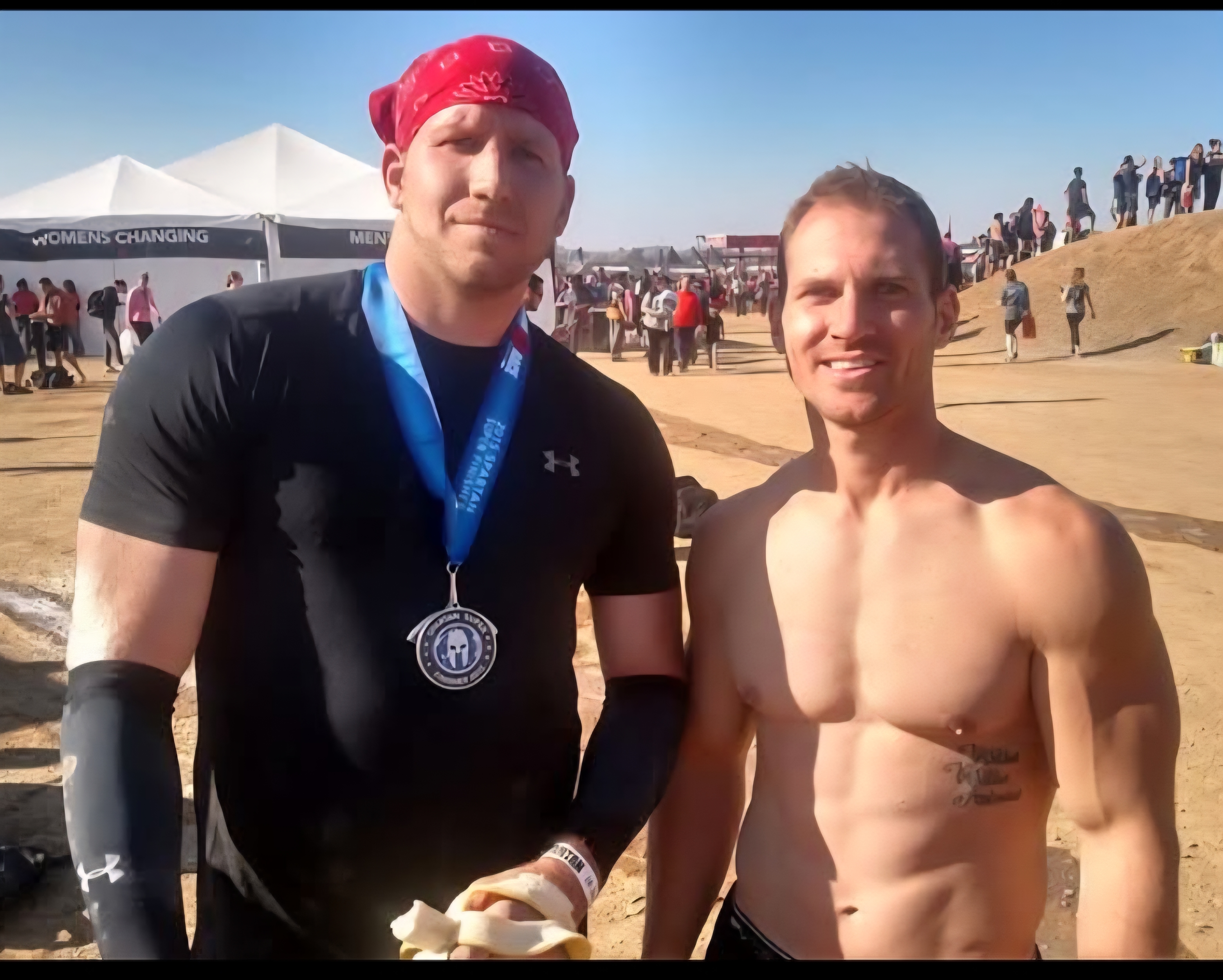
I've always been health conscious. I'm genuinely interested in how the human body works, in diet, in fitness. I still play sand volleyball, hike difficult terrain, and run Spartan races in the summers. The more I learned over the next decade on the farm, though, the more I realized I was living a contradictory life. I was trying to be as healthy as I could physically while coming to terms with the fact that I wouldn't eat anything I grew, and wouldn't recommend foods containing those products to friends who asked for my health advice. I enjoyed being outside, having a concrete goal to chase, and the hard work required to reach it. That part was deeply satisfying. But after some family dynamics shifted and too many years of living with that contradiction, I sold my interests to my brother and walked away from the family business.
That experience is a big part of why we wrote this blog about agricultural chemicals and what they actually do.
An Idea
When I made that decision, I genuinely had no idea what came next. I'm not someone who can sit still for long without needing a new challenge. I spent months trying different things, waiting for something to click. Then one day I walked outside to grab my Dr. Squatch subscription box off the porch and asked myself a simple question: could I make this?
I'd been using Dr. Squatch soap and deodorant for years because I'd already been learning about the side effects of mass-produced commercial soap, SLS, SLES, heavy metal contaminants, and specifically the use of aluminum in commercial deodorants. To be clear, I still use Dr. Squatch's deodorant for my own personal use. But that one question sent me down a path I never would have imagined as a kid. I dove into research on how soaps are made, the history of soap, the ingredients in natural bar soap, and what's actually in commercial body wash and bar soap. The more I learned, the more certain I became that there was something worth building here.
I knew I couldn't do it alone though. Clayton had mentioned to me one day, he was dropping off my agricultural sprayer after its yearly maintenance, that he wasn't as happy at his job as he used to be. You'd think that after 35 years of friendship I'd have said something right then and there. But I held back. Did I have enough information? Was this idea actually sustainable? Would he even want to be a business partner?
I spent months deliberating with myself, doing more research, running income and expense projections, and reading everything I could find about scents and soap making. Finally, I called Clayton and asked him to meet me at a local bar. Over drinks and some small talk he just looked at me and asked straight out what I wanted to talk about. I remember it clearly. I nervously stuttered through most of my idea before he stopped me mid-sentence and said: "What do you need from me?" He was ready to help before he even realized I was asking him to be my partner. His answer was an emphatic yes.
The Private Oaks Story
That conversation was a little over two years ago. From that meeting, Private Oaks began.
We didn't have a name yet. We knew we had time to figure that out because it would take months to refine our formula, decide on our scent profiles, and figure out how we wanted to market and sell. The one thing we knew from the very beginning was that we were only going to use organic oils. That was never a question.
The trial and error period started shortly after that first meeting. We didn't have a company set up yet but we bought a mold and ingredients anyway. We wouldn't officially create Private Oaks for another year. It took eight months to configure our exact formulas. We worked in three-pound batches, making three separate one-pound increments at a time to fill a mold with twelve four-ounce bar slots. We'd make three different formulas on Monday, another three on Tuesday, another three on Wednesday, and so on through the week. Then we'd wait a full month for them to cure. We tested hardness, lather, scent, color, clays, and salts. Eight months of that, one batch at a time, until every bar was exactly what we wanted it to be.
Every ingredient we use, where it comes from, and why it's there is documented on our ingredients page.
The name came one night when Clayton and I were reminiscing about high school. We've had the experience, unfortunately, of losing two of our closest friends. Those losses have only sharpened my focus on health and on living fully in the present, because I know better than most that the present is not guaranteed. We were laughing together that night over a memory of the six of us at one of our old high school gathering spots, a place we always called Private Oaks. The name felt right immediately. It's a connection to where we grew up and who we were. It's also a remembrance of our friends. One we lost nine years ago at the age of 31. Another we lost more recently, this year, at the age of 40.
We carry them with us.
Where We're Going
We want to keep our soaps affordable so more people can access them. We want to bring more scents and more experiences to our customers. But most importantly, we want to expand our product lines to offer people real alternatives to what's sitting on store shelves, products built around healthier living and longevity rather than mass production and profit margins.
We believe everyone deserves the opportunity and the education to make informed choices about what they put on their skin and in their bodies. If we can make any difference in people's lives, help them be a little healthier, a little more informed, a little more intentional, then we'd like the chance to try.
That's why Private Oaks exists.
If you want to see what all of that research, trial and error, and 45-day cures actually produced, our products are right here: our full collection
If you want to understand the ingredient choices behind every bar we make, we've written about all of it in The Grove.