.svg)
Menu
The word biodegradable on your soap bottle is doing a lot of work it wasn't designed to do. It tells you the soap can break down, but it doesn't tell you where, it doesn't tell you when, and it says nothing at all about what happens between the moment before your soap enters a stream and the moment after.
Most outdoor enthusiasts assume biodegradable means safe for waterways. It doesn’t, and it never did. The gap between what that word promises and what it actually delivers is wider than most people who spend time outside have ever been told.
I've spent a lot of time outdoors hiking, camping, hunting, and fishing. Clayton hunts, camps, and fishes, too. We built a skin care company, and it took us longer than it should have to sit down and answer the question every outdoor enthusiast deserves an answer to: what does the soap you use actually do to the places you go to get away?
This article is our attempt to answer that question without pulling punches. Some of what's here will surprise you, some of it, particularly the section on what's living in the fish you're catching, may genuinely change how you think about the waterways you spend time on, and some of it applies directly to the soap we make, including a limitation we'll address directly rather than hoping you don't notice.
Biodegradable Doesn't Mean What You Think It Means
Biodegradable has a specific scientific definition. A substance is considered biodegradable if it breaks down by at least 90 percent into water, carbon dioxide, and organic matter within six months through the action of living organisms. That's the standard. That's what the word means.
Here's what it doesn't mean. It doesn't mean safe, it doesn't mean harmless, and, most importantly, it doesn't mean the breakdown happens in a river, a lake, or a stream.
Biodegradation requires soil. The microorganisms that break down soap are soil bacteria, not aquatic organisms. When soap enters open water it doesn't biodegrade. It disperses, and it remains chemically active as a surfactant, meaning it continues doing what soap does, breaking down surface tension, emulsifying oils, and altering the chemistry of whatever it contacts, until it's either sufficiently diluted or until it eventually reaches soil. In a small stream, a quiet pond, or a backcountry lake, that dilution may never reach a safe threshold before the soap contacts the aquatic organisms living there.
This is why the Leave No Trace organization, which sets the gold standard for outdoor ethics, requires a minimum of 200 feet from any water source for any washing with any soap. That's approximately 70 adult paces. It’s not a suggestion. It's the distance that gives soap enough soil contact to begin breaking down before any runoff reaches the waterway.
Dr. Bronner's is the most recognized biodegradable outdoor soap brand in the world. It carries that 200-foot instruction on its label. If the brand most associated with environmentally responsible outdoor cleansing follows that rule, it applies to every soap behind every label using the word biodegradable, including ours.
The Belgrade Regional Conservation Alliance puts it plainly: getting any soap in a water source is not acceptable nor recommended, regardless of whether it's biodegradable. Not natural soap. Not organic soap. Not cold process soap made with plant oils. Any soap.
Understanding why requires understanding what soap actually does when it meets water.
What Soap Actually Does to Water
Every body of water is a chemistry experiment in constant balance. Temperature, pH, oxygen levels, surface tension, and nutrient concentrations all interact to create the conditions that allow aquatic life to survive. Introduce soap into that system and you're changing multiple variables simultaneously.
pH disruption
Your skin's natural pH sits between 4.7 and 5.5, slightly acidic. We've covered that extensively in our skin condition articles because it matters for the microbiome living on your skin. Aquatic ecosystems operate in a similarly narrow pH window. Most freshwater fish, amphibians, and invertebrates thrive between pH 6.5 and 8.5. Cold process soap runs at pH 9 to 10. Introducing alkaline soap into a stream or lake pushes the local water chemistry upward, creating conditions that stress the organisms living there. The smaller and slower the water source, the more significant that impact.
Surface tension disruption
Soap is a surfactant, which means it reduces the surface tension of water. That reduction matters to more organisms than most people realize. Aquatic insects including mayflies, water striders, and stoneflies rely on surface tension to move across the water's surface. These insects are primary food sources for trout and other game fish. When surface tension drops, their ability to navigate the water surface is compromised. The ripple effect up the food chain is real even if it's invisible.
Oxygen and nutrient disruption
Reduced surface tension also affects how oxygen is absorbed at the water's surface, which is the primary mechanism through which dissolved oxygen enters freshwater systems. Less dissolved oxygen means more stress on gill-breathing organisms. The breakdown products of soap also contribute excess nitrogen to the water, which triggers algal growth. Algal blooms deplete oxygen as they decompose, creating low-oxygen zones where fish and invertebrates cannot survive.
The difference between natural soap and synthetic detergents
This is where the soap you choose starts to matter, even though the 200-foot rule applies to all of it.
A 2024 peer-reviewed study published in Water, Air, and Soil Pollution exposed fish and amphibian embryos to SLS at concentrations as low as 0.1 milligrams per liter and documented mortality, reduced hatching rates, and malformations. SLS is the primary surfactant in most commercial body washes and many commercial bar soaps. It's classified by researchers as a pseudo-persistent pollutant in aquatic ecosystems because despite technically being biodegradable, its continuous introduction from personal care products maintains environmentally relevant concentrations in waterways. A separate systematic review found evidence of SLS toxicity to aquatic organisms at concentrations ranging from 0.001 to 20,000 milligrams per liter, with aquatic organisms consistently more susceptible than terrestrial ones.
A 2025 study published in a peer-reviewed scientific journal compared natural soap compounds made from saponified fatty acids, which is exactly what cold process soap is, against synthetic detergents including SLS. Using internationally standardized testing protocols and aquatic organisms including algae, crustaceans, and fish, it found that natural soap components were less toxic and more biodegradable in aquatic environments than synthetic detergents. That study was funded by a Japanese natural soap company and should be read with that conflict of interest in mind. The finding is consistent with the chemistry of these ingredients and is supported by independent research on SLS toxicity, but the funding source is worth knowing.
Synthetic fragrance compounds are a separate and documented concern. Many fragrance chemicals including synthetic musks and phthalates bioaccumulate in aquatic organisms, meaning they concentrate up the food chain rather than dispersing. They've been detected in fish tissue, sediment, and drinking water sources globally. Synthetic preservatives including triclosan and triclocarban, which the FDA banned from consumer soap in 2017 partly due to environmental persistence, were detected in 60 percent of US waterways examined by researchers at Johns Hopkins University. Less than 25 percent of triclocarban is removed by wastewater treatment plants.
The honest picture is this. All soap affects aquatic ecosystems and the 200-foot rule exists for all of it, but the soap you choose determines how significant that impact is and what chemical load you're contributing to the waterways you spend time on. A bar made from saponified plant oils with no synthetic surfactants, no fragrance compounds, and no synthetic preservatives is a meaningfully different environmental proposition than a commercial body wash, even if neither one belongs in the water directly.
The Fish You're Catching Are Carrying More Than You Know
This section may genuinely change how you think about the waterways you spend time on. Not because of anything soap does directly, but because of what's already there.
In 2023 researchers published a peer-reviewed study in the journal Environmental Research analyzing data from more than 500 fish fillet samples collected by the EPA from rivers and lakes across all 48 continental United States. What they found should be part of every conversation about outdoor recreation and water safety.
Freshwater fish contained approximately 278 times more PFAS than commercially caught saltwater fish and shellfish. PFAS, which stands for per- and polyfluoroalkyl substances, are a class of synthetic chemicals used since the 1940s in products ranging from nonstick cookware and waterproof fabrics to food packaging and firefighting foam. They're called forever chemicals because they don't break down in the environment or in the human body. They accumulate, they concentrate up the food chain, and they've been linked to liver damage, immune system disruption, fertility problems, elevated cholesterol, and several types of cancer.
The numbers in the study are not easy to set aside. The median level of PFAS in freshwater fish was 9,500 nanograms per kilogram. Eating a single serving of freshwater fish caught in a US river or lake was calculated to be the equivalent of drinking water contaminated with PFOS, one of the most hazardous PFAS compounds, at 48 parts per trillion for an entire month. The EPA's current recommended safe limit for PFOS in drinking water is 0.02 parts per trillion. That single serving of fish represents exposure at 2,400 times that limit.
PFAS were detected in nearly every single sample, and the contamination wasn't limited to fish near industrial sites or heavily farmed areas. It was found in fish from rural waterways across the country including areas with no obvious nearby contamination source.
PFAS are not the only concern. A separate peer-reviewed study published in ScienceDirect in 2024 documented the presence of mercury, PCBs, organochlorine pesticides, organophosphate pesticides, chlorophenoxy herbicides, and flame retardants in freshwater fish across the US. The chemicals accumulate most in top predatory fish, the same species outdoor enthusiasts most often pursue. Largemouth bass, smallmouth bass, lake trout, pike, walleye, and catfish all concentrate contaminants through a process called biomagnification, where each level of the food chain accumulates higher concentrations than the one below it.
Where These Chemicals Come From
The sources of freshwater contamination are not limited to industrial discharge, though that is a significant contributor. The full picture includes every category of chemical that enters waterways through human activity.
Agricultural runoff carries pesticides and herbicides from fields into streams, rivers, and groundwater that feeds lakes and ponds. The same chemicals Clayton and I spent an article discussing in the context of what we grew up farming are entering waterways at scale across the agricultural midwest. We covered the documented effects of glyphosate, atrazine, and phthalates on human health in our chemical article. In aquatic ecosystems those same chemicals are disrupting the hormonal systems of fish and amphibians, contributing to reproductive failures and population declines in species that outdoor enthusiasts depend on.
Wastewater treatment plants are a documented point source of personal care product chemicals in natural waterways. Synthetic fragrance compounds, synthetic preservatives including parabens and phenoxyethanol, surfactants including SLS and SLES, and synthetic colorants all enter treatment plants through household drains and are not fully removed before the treated water is discharged back into rivers and streams. A Johns Hopkins University study found triclocarban, an antibacterial compound the FDA later banned from consumer soap, in 60 percent of examined US waterways. Less than 25 percent of it was being captured by treatment plants.
Stormwater runoff carries motor oil, tire rubber compounds, road treatment chemicals, lawn care products, and whatever else accumulates on paved surfaces into storm drains that often discharge directly into waterways without treatment.
Landfill leachate carries PFAS and other persistent chemicals from products disposed of in landfills into groundwater that feeds the same rivers and lakes outdoor enthusiasts fish.
The result is a chemical soup that has been building in freshwater ecosystems for decades. The fish living in those ecosystems are the most visible evidence of that accumulation, and the data on what they're carrying is not reassuring.
Lakes and Ponds Versus Rivers and Streams
The contamination picture is not uniform across water body types and the distinction matters for outdoor enthusiasts who fish different environments.
Lakes and ponds accumulate contamination over time with less dilution than flowing water. Chemicals that enter a lake stay there longer, concentrate more readily, and build up in sediment that continues releasing them back into the water column over years. The highest PFAS concentrations in the EPA data were found in lakes and slow-moving river systems.
Fast-moving streams and rivers dilute contamination through flow but they also carry contamination continuously from upstream sources. A pristine-looking mountain stream in a remote watershed is genuinely less contaminated than a lowland river draining agricultural land, but even remote waterways aren’t immune. The EPA data found PFAS in fish from every single state including areas far from obvious contamination sources, which suggests atmospheric deposition and groundwater movement are carrying these chemicals into watersheds that have no direct human activity nearby.
The honest position is that no freshwater environment in the continental United States can be assumed to be free of PFAS and other persistent contaminants. Some are significantly worse than others, however all are affected.
What This Means for Hunters
Deer have a sense of smell that researchers at Mississippi State University's Deer Lab found to be 500 to 1,000 times more sensitive than a human's. They have thousands of scent receptors capable of sorting up to six different smells simultaneously. Under the right conditions, high humidity, mild temperatures, and a light breeze, a mature buck can detect human scent from half a mile away or more.
What deer are detecting isn't just sweat, it’s a complex cocktail of human-origin compounds including shed skin cells, breath chemistry, bacterial activity on the skin, and the residue of every product that has contacted your body. The detergents used to wash your clothes, the soap used on your body, and any fragrance compounds from either are specifically documented in hunting literature as detectable and repulsive to deer. A wary buck doesn't just smell a human, it smells the chemical signature of everything that came with you.
This is why scent control matters and why the soap you shower with the morning of a hunt is part of that equation. Synthetic fragrance compounds in conventional soap, even at trace levels, create a chemical signature that is foreign to the natural environment a deer lives in. Those compounds are not part of the scent profile a deer has learned to sort through and categorize. They stand out.
The caveat that every experienced hunter already knows is that complete scent elimination is impossible. Even after a thorough wash with a fragrance-free product or a scent blocker you apply to your clothes and body, your body continues producing scent through breath, perspiration, and the constant shedding of skin cells. Researchers and hunting experts are consistent on this point. The goal of scent control is minimization, not elimination. Wind direction, stand placement, and movement discipline matter as much or more than any product choice.
What an unscented soap free of synthetic fragrance compounds does is remove one significant and unnecessary variable from an already difficult equation. It doesn't make you invisible to a deer's nose, but it does make you harder to identify at the margins, and, in deer hunting, margins are often the whole game.
One note worth mentioning for hunters specifically. Strongly scented soap, particularly bars containing tallow, has actually been documented as a deer deterrent. Gardeners hang scented soap bars to repel deer from vegetable gardens. That fact alone tells you something about how well a deer's nose distinguishes between soap scent and the natural environment.
What This Means for Fly Fishermen and Campers
For anyone whose outdoor activity brings them into close proximity to water, the 200-foot rule is not a detail in the fine print. It’s the single most important practical guidance in this article.
Here’s what it looks like in practice. When you need to wash at camp, fill a small container with water at least 200 feet from the nearest water source, which is approximately 70 adult paces. Wash there. When you're done, scatter the grey water broadly over the soil rather than pouring it in one spot. Dispersing it across a larger soil surface area gives the soil bacteria more contact area to begin breaking it down before any of it can concentrate and run off toward the waterway.
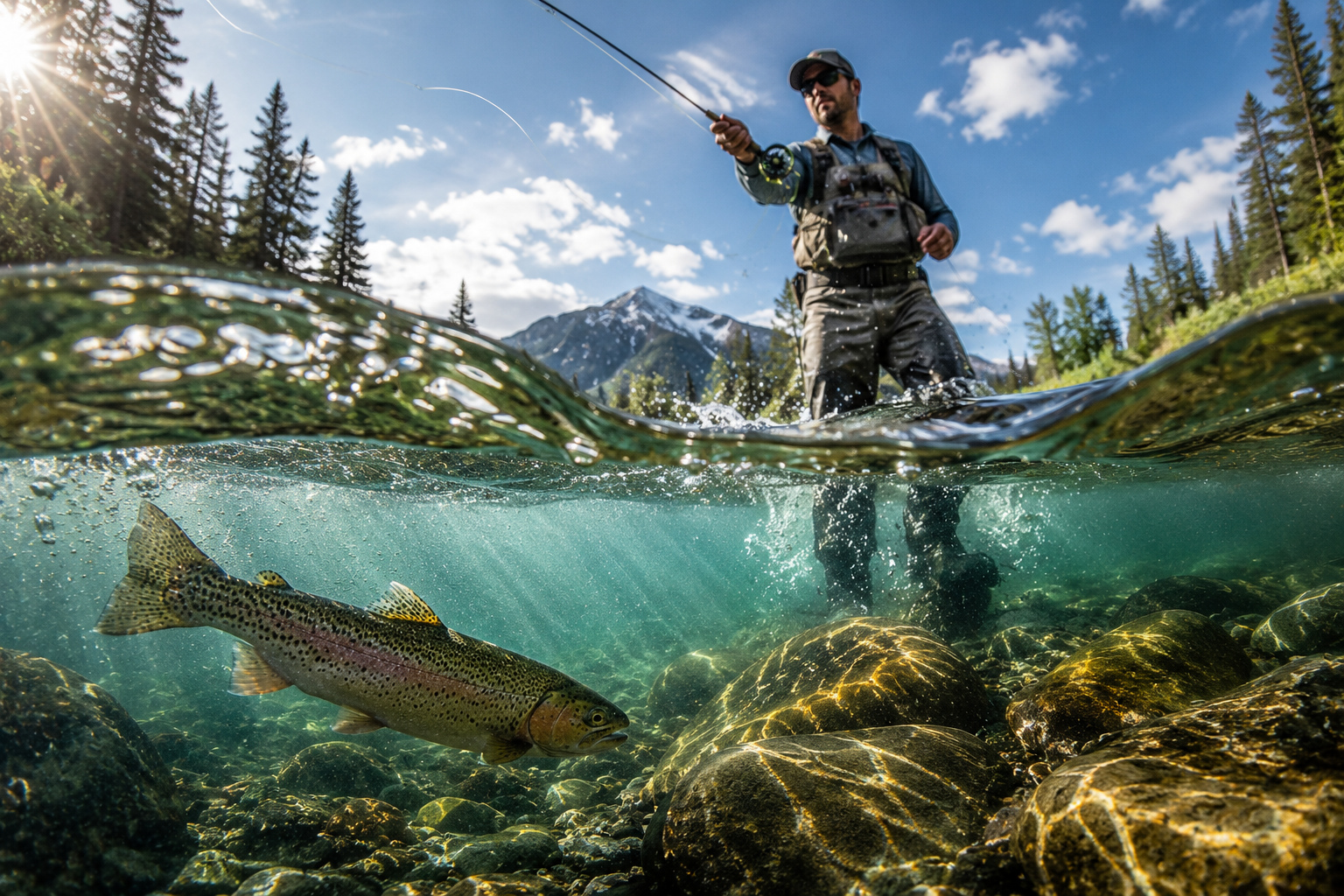
For fly fishermen the aquatic ecosystem concerns in the previous sections are not abstract. The mayfly hatches, caddis emergences, and stonefly populations that make a trout stream productive are the same invertebrate communities most sensitive to surfactant disruption and pH changes from soap. The insects that trout are feeding on are the first organisms affected when soap enters a stream. Understanding that connection changes how you think about what you rinse off your hands at the water's edge.
Wading into a stream after washing with a conventional body wash containing SLS and synthetic fragrance compounds isn’t the same as wading in after washing with a soap free of synthetic surfactants. The residue on your skin and wading gear that enters the water with you is different in both type and environmental impact. This isn’t a reason for paranoia, but it’s a reason for awareness.
For campers the same principles apply regardless of whether water is nearby. What you wash with at camp eventually ends up in the soil and groundwater of the places you're trying to protect. The chemical load of conventional personal care products accumulates in those environments the same way it accumulates in the freshwater fish we discussed in the previous section. The choice of what to bring into the backcountry is a small but real expression of how seriously you take the places you go to get away.
The Practical Guidance
Follow the 200-foot rule every time with every soap. This isn’t negotiable regardless of what the label says.
Use the minimum amount of soap necessary. More soap doesn’t mean cleaner, it means more soap in the soil and eventually in the watershed.
Scatter grey water broadly over soil. Never pour it in one spot and never pour it directly into or near a water source.
For hunters shower with an unscented fragrance-free soap the morning of the hunt. Wash hunting clothes with an unscented fragrance-free detergent. Store them in a sealed container away from household odors until you're ready to go.
For fly fishermen and campers consider what residue from your personal care products enters the water with you. The choice to use products without synthetic surfactants, synthetic fragrance, and synthetic preservatives is one of the most direct expressions of leave no trace ethics available in your daily routine.
What to Bring Into the Field
We built Private Oaks around one consistent philosophy: clean ingredients, nothing hidden, and no claims we can't back up. That philosophy applies here too, which means being direct about what our soap can and can't do for outdoor enthusiasts.
No soap belongs in a waterway. Ours included. The 200-foot rule applies to every bar in our lineup without exception.
With that said, not all soap is the same environmental proposition and the differences matter for people who spend time in the places these chemicals eventually reach.
Every Private Oaks bar is made from saponified plant oils with no synthetic surfactants, no synthetic preservatives, no parabens, no synthetic colorants, and no antibacterial agents. Every documented category of personal care product chemical that researchers have found accumulating in freshwater fish and waterway sediment is absent from our formula.
For hunters, campers, fly fishermen, and anyone else whose time outside matters enough to think carefully about what they're bringing into it, we put together our Trail's End bundle specifically with that audience in mind.
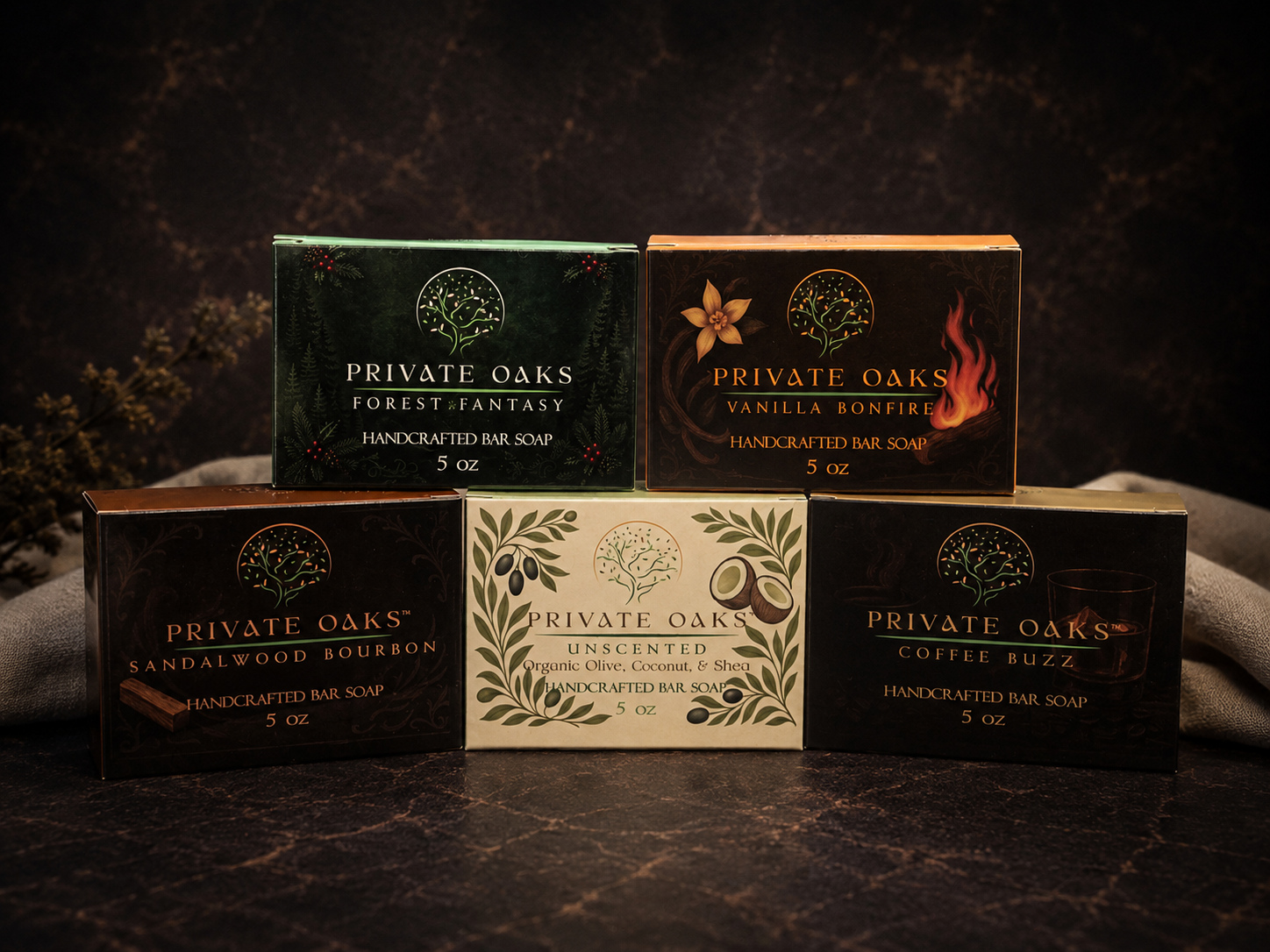
Trail's End brings together five bars chosen for the way they fit into life outside. Vanilla Bonfire for the campfire. Coffee Buzz for the morning brew. Sandalwood Bourbon for the warmth of the woods. Forest Fantasy for the pine and oakmoss of the trail. And Unscented for when you need clean without the fragrance. Every bar handcrafted with organic oils. No synthetic detergents. No compromise.
For hunters specifically the Unscented bar is the straightforward recommendation. No fragrance compounds of any kind. No synthetic chemical signature. Just saponified plant oils, retained glycerin, and French green clay. Nothing will make you invisible to a deer's nose, but it removes a variable that commercial soap adds unnecessarily.
The 200-foot rule still applies to all of it.
The Bigger Picture
The freshwater fish data, the waterway contamination sources, the chemistry of what soap does when it enters an aquatic ecosystem. None of that exists in isolation from the broader conversation about what we put into the natural world and what accumulates there over time.
The outdoor community understands this better than most. Hunters, fly fishermen, campers, and hikers are among the most attentive observers of ecosystem health in any part of American culture. You notice when a hatch doesn't happen the way it used to. You notice when deer behavior changes. You notice when a stretch of river that used to fish well goes quiet. The data on freshwater contamination is one part of the explanation for patterns that observant outdoor people have been noticing for decades.
Choosing products with cleaner ingredients for your time outside is a small decision in the context of the scale of contamination that's already in these ecosystems. We're not going to overstate it, but small decisions made consistently by a lot of people who care about the places they spend time add up to something. Caring enough to make those decisions is what distinguishes the outdoor community from everyone else who takes these places for granted.
Follow the 200-foot rule, choose products that don't add to the chemical load already in these watersheds where you can, and keep going outside. The places you care about need people who care about them.