.svg)
Menu
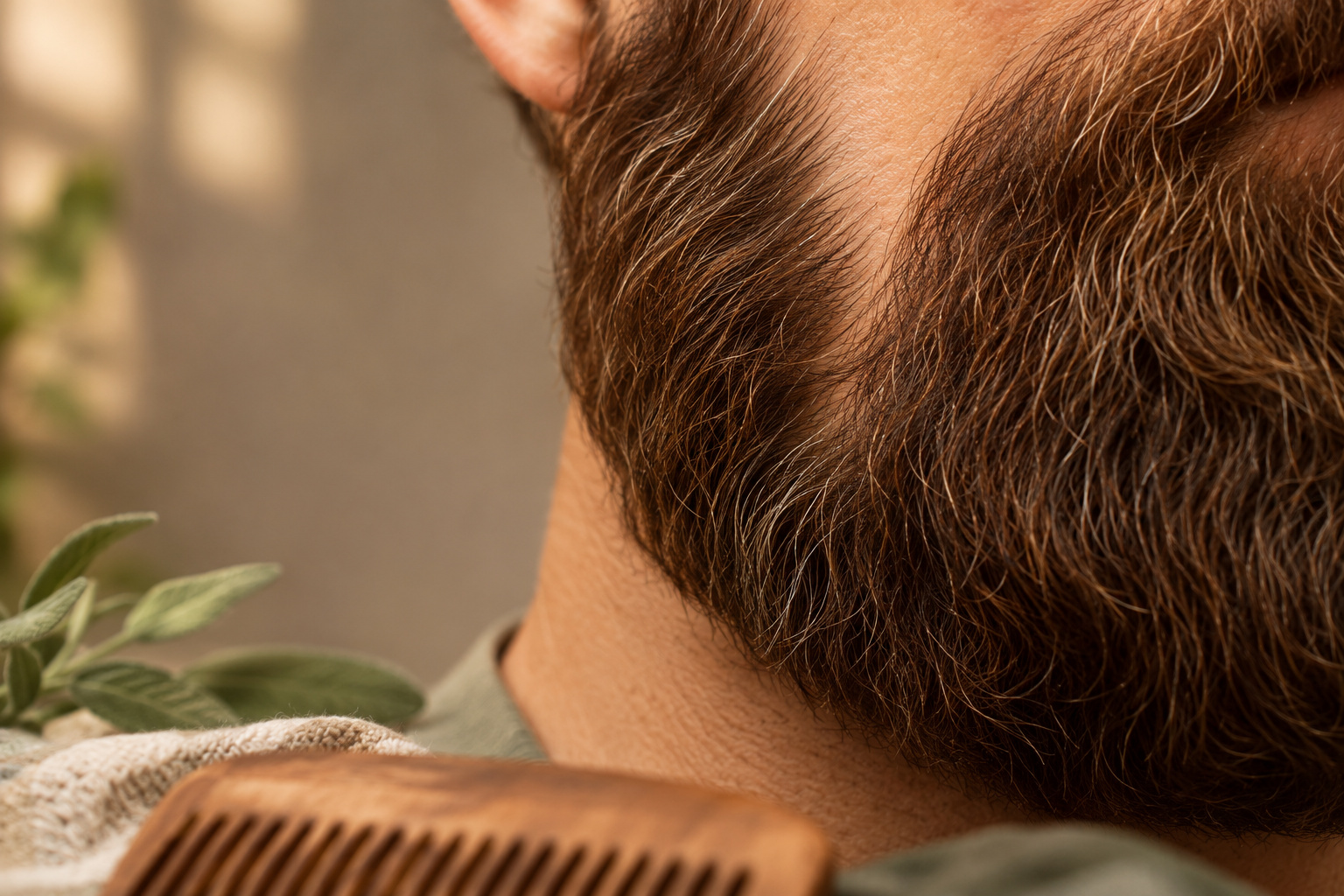
Every November, a lot of men put down the razor and meet their own skin for the first time in years. Within the first few weeks the beard itch starts, and plenty of them are ready to shave it all off. It’s rarely the beard’s fault. It’s what’s happening on the skin underneath.
History
People across the ancient world oiled and styled their hair and beards. The Getty Museum notes that the ancient Mesopotamians and Assyrians made scented oils for the hair, beard, and body from fragrant plants, flowers, resins, and spices. Carvings at Persepolis, cataloged by Cornell and Harvard, show Persian hair and beards set in rows of tight curls. Ancient Egyptian men were mostly clean-shaven, but their hair care left evidence of its own, including a fat-based hair gel on mummy hair and a New Kingdom wig in the British Museum set with beeswax and resin. In Rome, a young man might oil his chin hoping to speed up his first beard.
Most of what goes into modern beard balms has a history of its own. Beeswax was part of ancient Egyptian medicine and beauty, according to the University of Birmingham’s Egyptology collection. Anthropologists from the University of Oregon found that shea butter was being produced in what’s now Burkina Faso nearly 2,000 years ago. A genetic study led by researchers from Washington University in St. Louis suggested that coconut was brought into cultivation independently in two places, Southeast Asia and southern India, and early European explorers recorded Polynesian peoples using coconut oil on skin and hair. Jojoba gets its name from the O’odham people of the Sonoran Desert, who made the nut into a salve for burns, and native peoples of the region also used the oil to style hair, as the University of Arizona’s arboretum describes. Lastly, Amazigh women in Morocco have pressed argan oil for centuries. None of this proves what these ingredients do for a beard, but it does show people kept coming back to them for a very long time, which is a fair starting point for asking what the skin under your beard needs.
Why Beards Itch
The itch usually isn’t one thing. Dermatology sources, including the American Academy of Dermatology, the Cleveland Clinic, and Yale Medicine, describe a handful of causes that often overlap, and most of them start with the skin, not the hair.
Dry skin is one of the most common. Cold, dry air pulls moisture out of skin, and so can soaps, shampoos, and other facial products that strip natural oils. Dry skin flakes and itches with or without a beard on top of it, but a beard makes it harder to see and harder to moisturize since anything you apply has to get through the hair to reach the skin.
New growth is the next one. Your follicles never stop making hair while you shave, and each hair is just being cut off at the skin’s surface every day. When you stop, all of those hairs start growing out at once. Beard hair is also a lot thicker than the hair on your head. In a study by the Gillette Research Institute, beard hairs were about one and a half times as wide as scalp hairs from the same men, with close to twice the cross-sectional area. So for the first few weeks they’re short, stiff, and blunt-tipped, and they rub against your skin and your collar, which is likely part of why the itch tends to hit early and across the whole face.
That blunt tip is also behind one of the oldest grooming myths, that shaving makes hair grow back thicker, darker, or faster. It doesn’t. Mayo Clinic says shaving doesn’t change hair’s thickness, color, or rate of growth, with the research going back nearly a century. A 1928 study of men’s beards by anthropologist Mildred Trotter found no effect from shaving, and a 1970 study in the Journal of Investigative Dermatology found the same thing on shaved versus unshaved legs. The blunt tip can feel coarse and look darker while it grows out, but that’s all it is. How full a beard grows in comes down mostly to genetics and hormones, so a month without the razor won’t change what your face can grow, but it will show you what it was already doing. The same goes for oils and balms. They condition the hair and the skin underneath, but they don’t change how much hair you grow.
Ingrown hairs are another cause. Short, curly hairs can curve back into the skin instead of growing out, which is most likely during the stubble stage and around the neckline where you trim. The medical name is pseudofolliculitis barbae, and the red bumps can look like acne. Coarse or curly hair is more prone to it.
Then there’s what a beard holds against the skin. The AAD notes that beard hairs trap oil, dead skin cells, and bacteria close to the skin. Dr. Alok Vij of the Cleveland Clinic says humidity and skin flaking under a beard create conditions where staph bacteria can thrive, which can inflame hair follicles. We covered how the bacteria on your skin work in our microbiome article. Sometimes the cause is something else entirely, like a reaction to a product, a fungal infection, or beard dandruff, which we’ll discuss further. The AAD says to see a dermatologist if you get acne-like breakouts, pain, or broken skin under your beard.
What these causes share is the skin underneath, and that’s where the rest of this article spends its time.
Dry Skin or Beardruff?
Flakes in a beard usually get blamed on dryness or on hygiene. Sometimes it’s dry skin, and sometimes it’s something else, and the two call for different handling.
The usual something else is seborrheic dermatitis, a common inflammatory skin condition that’s closely related to dandruff and often called beardruff when it shows up in a beard. It can also appear on the eyebrows and in the folds beside the nose. It doesn’t mean you’re washing too little, and Yale Medicine notes that it looks like a hygiene problem but isn’t one.
What causes it isn’t fully settled. The National Eczema Association says research on the underlying causes is limited. The piece most often pointed to is Malassezia, a tiny yeast, which is a type of fungus. It lives on the skin of most people, especially in oily areas like the scalp, face, and upper body, and mostly does no harm. Malassezia can’t make its own fats, so it lives off the oils your skin produces. As it feeds, it breaks those oils down and leaves behind byproducts, including a fatty acid called oleic acid that can irritate skin. In one study, putting oleic acid on the scalp caused dandruff-like flaking in people who were prone to dandruff. Why it bothers some people and not others isn’t fully understood, but the association says the immune system, the skin barrier, and how active your oil glands are all seem to play a part. It also says diet, skin care products, and growing facial hair could be factors, though more research is needed to link them, which may be one reason it can show up after you grow a beard.
Where oils fit is less clear. Because Malassezia feeds on fats, researchers have wondered whether oils applied to the skin could feed it too. In lab tests, several common oils, including olive and coconut oil, supported its growth. No clinical trials have tested beard or hair oils on seborrheic dermatitis, so nobody knows how much that matters on real skin. A 2023 paper in “Skin Appendage Disorders” argued, based on those lab results, that hair oils may make the condition worse. Meanwhile, the AAD recommends beard oil for normal or dry skin, which is the situation where moisturizing helps.
So how do you tell which one you have? Dry skin tends to flake without much redness, but beardruff usually brings redness and/or irritation along with the flakes. You can’t reliably tell from the mirror, though, so if flaking keeps coming back, a dermatologist can sort it out. Yale Medicine suggests starting with an over-the-counter dandruff shampoo containing 1 percent ketoconazole, and the American Academy of Dermatology recommends washing the beard and scalp with a dandruff shampoo at least once a week.
Whichever it is, the next question is how much washing a beard really needs, and whether beards are as dirty as the headlines say.
Are Beards Dirty?
You've probably seen the headlines. In 2015, a story went viral claiming beards hold more fecal bacteria than a toilet seat. It came from a local TV segment in Albuquerque where a lab swabbed the beards of a handful of volunteers. It wasn't a study, and it found enteric bacteria, which live in the gut but also turn up elsewhere, and it didn't find feces.
A 2018 Swiss study appeared in a medical journal, which gave it more weight. Researchers swabbed 18 bearded men and 30 dogs having MRI scans, because they wanted to know whether dogs and people could safely share a scanner. Every man's beard had a high bacterial count, compared with 23 of the 30 dogs, but the headlines left out two details. The difference in disease-causing bacteria, found in 7 of the men and 4 of the dogs, wasn't statistically significant, and no clean-shaven men were tested, so the study can't tell you whether a beard is dirtier than a shaved face. The authors concluded that, with routine disinfection, sharing a scanner with dogs wasn’t a hygiene concern.
Studies that did compare bearded and clean-shaven faces don't agree. A 2014 study of 408 male healthcare workers at a Boston hospital found similar bacteria overall. Workers with facial hair were less likely to carry Staphylococcus aureus (about 41 percent versus 53 percent) and a resistant group of staph bacteria (2 percent versus 7 percent). The authors suggested that tiny nicks from shaving might help bacteria settle in, but they didn't test that. A 2022 study of 80 operating room workers in Beirut went the other way and found a higher bacterial load on bearded faces. Lab tests of bacteria shed from behind surgical masks conflict too, with a 2000 study finding more from bearded men and a 2016 Mayo Clinic study finding no difference. In actual surgeries, a 2026 review found no significant difference in infection rates between bearded and clean-shaven surgeons.
What does hold up is that a beard is harder to clean. In a 1967 U.S. Army study, researchers sprayed the beards of four volunteers with harmless bacteria and found that washing with soap and water reduced the bacteria but didn't remove all of it. That was a small test on beards that were contaminated on purpose, but it fits what the American Academy of Dermatology says about beards trapping oil, dead skin cells, and bacteria next to the skin.
So a beard isn't automatically dirty, and it isn't automatically cleaner. It does ask for a little more care than a shaved face. Beyond washing every day, the AAD says to keep your hands off your beard, since touching and stroking it transfers germs and dirt from your hands, and to pat dry with a clean towel. Experts quoted by The Washington Post add that it's worth washing again after a hard workout or a messy meal. You don't need to sterilize it because most of the bacteria on your skin do no harm, and some help, as we covered in our microbiome article. The goal is a beard clean enough to keep the skin underneath calm.
That brings us to what to wash with.
Soap, Cleanser, or Shampoo?
Washing a beard isn't optional. The American Academy of Dermatology says washing removes the dirt, oil, germs, pollution, and dead skin cells that build up on your beard and the skin under it, and Yale Medicine recommends washing the face, beard included, twice a day with a gentle cleanser. The real question is what to wash with.
The AAD's answer is a gentle cleanser made for your skin type, and it specifically says to use that rather than soap. We make soap, and for a beard we agree. Cold process soap sits at about pH 8.5 to 9.5 after a standard cure. Skin sits at 4.1 to 5.8, and hair sits at 4.5 to 5.5. We covered what that gap does in our pH article. Skin can recover from an alkaline wash, but hair can't close its cuticle again on its own. A beard is both hair and skin, so we wouldn't use a cold process bar as a beard wash.
What counts as a gentle cleanser? For skin that burns easily, the AAD suggests a creamy facial cleanser labeled soap-free and fragrance-free. Soap-free usually means a synthetic detergent formula, with the trade-offs we described in our body wash article. The upside is a pH closer to your skin's natural range. Healthline notes that shampoos, soaps, and other facial products can strip the skin's natural oils, which is one of the causes of beard itch, so choosing a cleanser made for the face is worth the effort.
What about shampoo? In dermatology advice, shampoo shows up mostly as a treatment step. The AAD recommends a dandruff shampoo for beardruff, as we covered above, and Cleveland Clinic dermatologist Dr. Alok Vij suggests washing well with shampoo for some beard skin problems. For everyday washing, the AAD's answer is still a gentle cleanser made for your skin type.
Rinsing matters too, especially with hard water. The minerals in hard water can react with soap and leave a film on skin and hair, and they can make synthetic cleansers rinse off less completely, as we covered in our hard water article. A beard is hair growing out of skin, so the same thing can happen there, though we haven't found a study done on beards. If you live somewhere with hard water, rinse thoroughly with lukewarm water. A shower filter can help, too.
After washing, the AAD says to apply moisturizer right away, working it into both the skin and the beard. That's where balms and oils come in.
What's in a Beard Balm and Wax
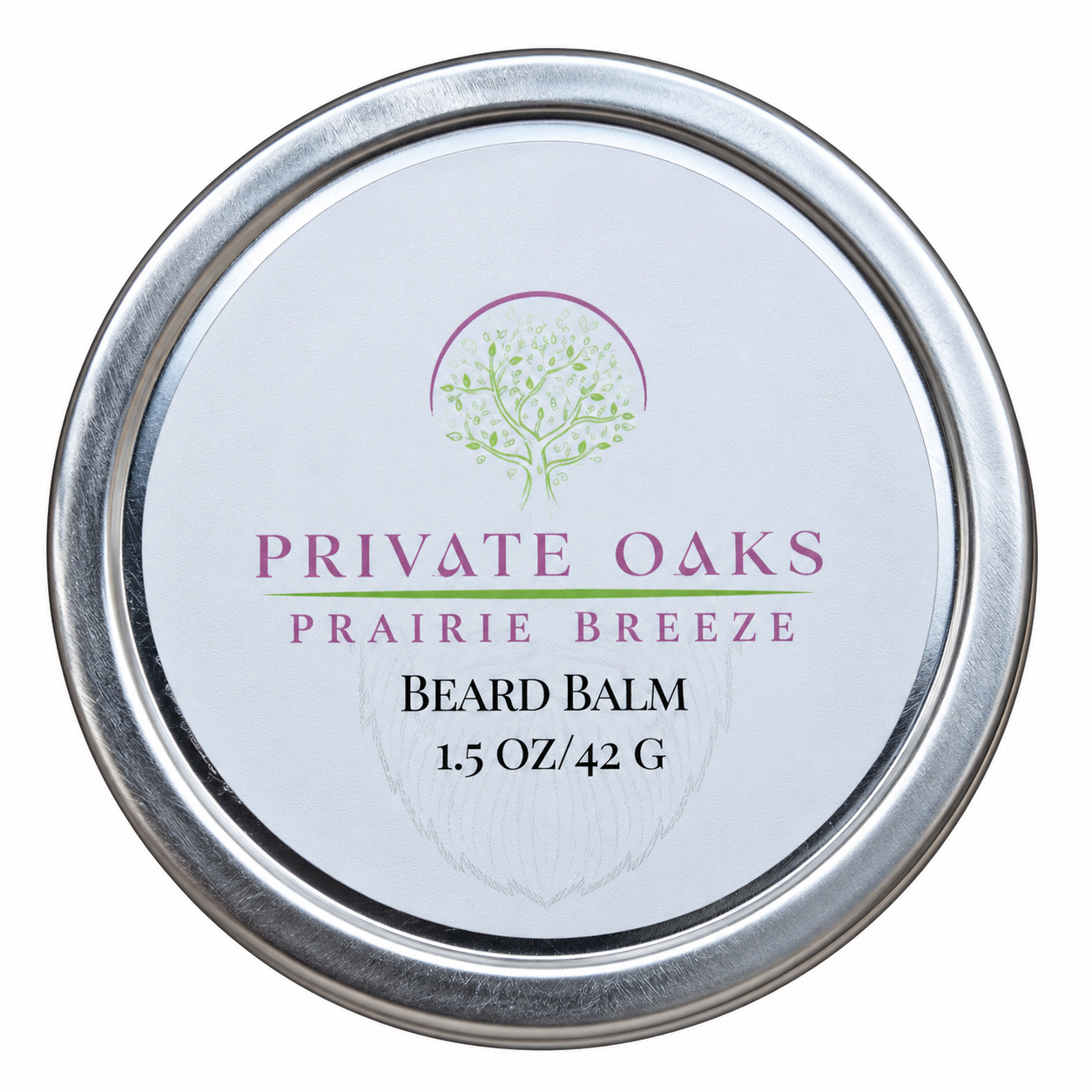
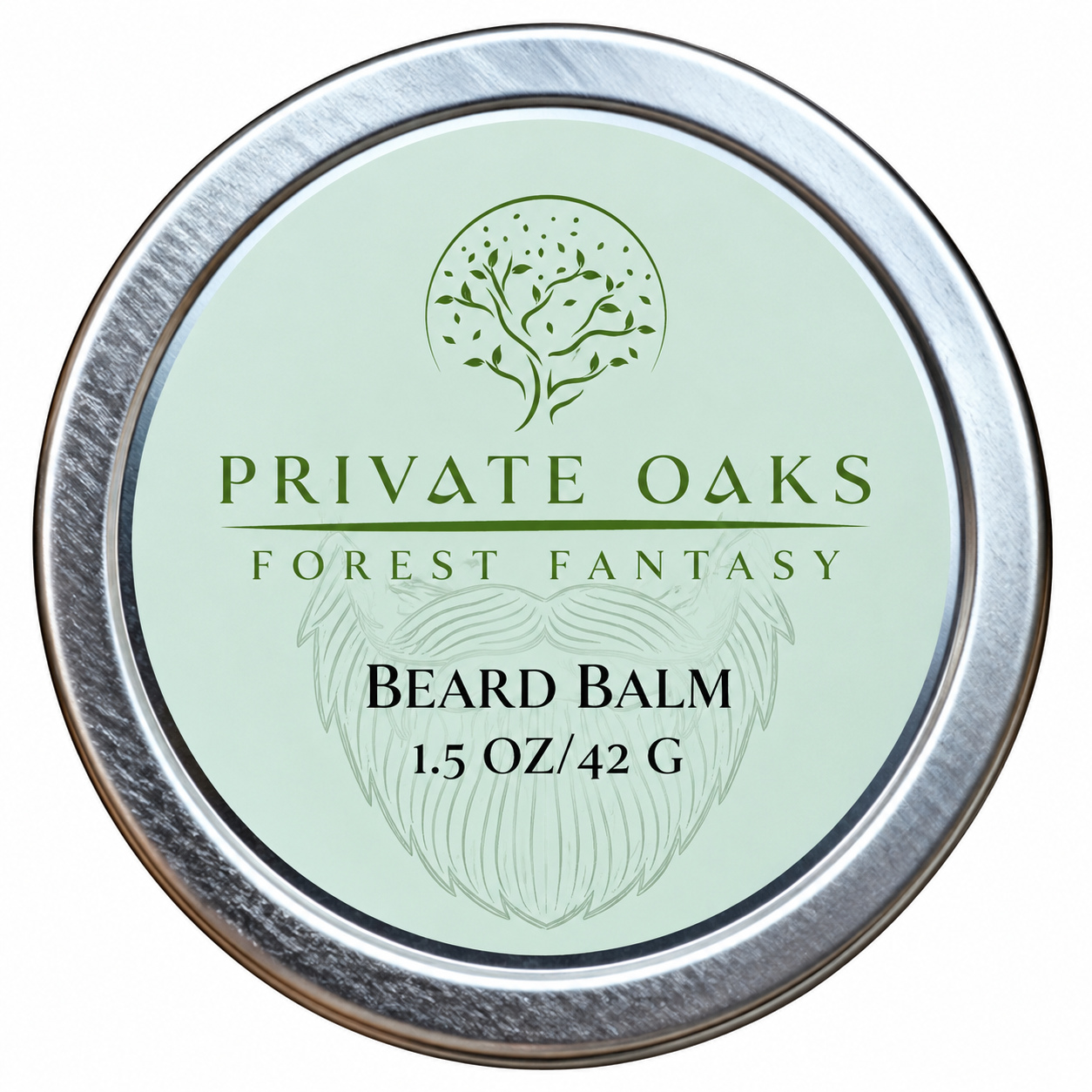
Our beard balm and beard wax are made from the same seven ingredients in different proportions. The balm is for moisturizing and softening, and the wax is for styling, with some conditioning along with it.
Both are made with organic shea butter, coconut oil, jojoba oil, beeswax, and argan oil, plus borage oil and vitamin E, which aren't organic. Several people tried our balm and wax and gave us feedback, which is a real part of how we got here. However, there isn’t much published research on these ingredients for beards, so what follows is what's known about each ingredient and where it comes from. You can see everything we use on our ingredients page.
Shea Butter and Coconut Oil
Shea butter is one of the oldest ingredients on the list. University of Oregon anthropologists found evidence of shea butter production in what's now Burkina Faso from about 100 CE, and shea has a long place in traditional medicine in West and East Africa. In the jar, it's a rich, solid butter that softens and moisturizes the skin and gives the balm its body. It's also a common ingredient in hair conditioners, where it coats the hair and leaves it feeling softer. Paired with beeswax, it helps form a protective layer on the skin that holds moisture in and limits water loss.
We use extra virgin coconut oil, which isn't refined, so it keeps more of the coconut's natural antioxidants than refined oil does. It's high in lauric acid, deeply moisturizing, and absorbs readily, and it works with the beeswax to seal moisture into the skin. That moisturizing effect on dry skin is why it's in the balm. In lab studies on hair, coconut oil reduced protein loss during washing and grooming, though the early studies came from a coconut oil maker and a 2024 independent study found it didn't change the strength of textured hair. In lab studies, lauric acid has also shown antimicrobial activity, and in a small trial of adults with eczema, those using virgin coconut oil carried less staph on their skin than those using olive oil. However, none of those were done on beards.
The same fat cuts the other way, too. The yeast linked to beardruff can use lauric acid, and coconut oil supported its growth in lab tests, although nobody has tested that on real beards, so we can't say how much it matters. If the skin under your beard is prone to flaking and redness, that's worth knowing. Coconut also has a high rating on the traditional comedogenic scale, a rough guide based on old rabbit-ear tests that doesn't always match what happens on human skin, which is why we leave it out of our acne-prone cream. If you break out easily, patch test first or ask a dermatologist.
Jojoba, Argan, and Borage
Jojoba isn't a typical oil chemically. It's a liquid wax that closely resembles the wax esters that make up about a quarter of human skin oil. It feels lighter than most oils and conditions without a greasy finish. We use golden jojoba, the unrefined form. Refined jojoba is filtered, bleached with clay, and deodorized. In a lab test, jojoba wax didn't change the growth of the beardruff yeast.
In surveys of traditional use in Morocco, skin problems were among the most commonly reported uses of argan oil. It's a light oil that absorbs without feeling heavy, and it adds shine and softness to a beard. The research is modest, but small studies on the forearm skin of postmenopausal women found improved hydration, though both groups applied argan and the oil was supplied by a producer. Small lab studies on dyed hair found less damage, but beard hair is usually untreated, and a 2024 lab study on untreated straight hair found argan increased water uptake and lowered strength. A 2022 review of the hair evidence found no significant benefit for hair quality or growth. Shine and softness are the benefits that fit its traditional use and how it feels on the hair.
Borage the herb has grown in European gardens for centuries and is thought to appear in the writings of Dioscorides and Pliny. The oil pressed from its seeds is a modern product. Borage oil is one of the richest known plant sources of gamma-linolenic acid, or GLA, an omega-6 fatty acid, and ours is standardized to 20 percent GLA. Linoleic and oleic acid make up most of the rest. Cosmetic ingredient databases classify it as a skin-conditioning oil, and that's why it's in our balms and waxes. Borage plants can contain compounds called pyrrolizidine alkaloids that are harmful to the liver when swallowed, and they're removed from the oil during processing. Ours is certified PA-free by our supplier. Unfortunately, nobody has tested borage oil on beards, and most of the research on GLA has used oral supplements, so we only claim what it does as a moisturizing oil.
Beeswax
Beeswax is a very old ingredient in hair and skin care. University of York researchers found beeswax, plant oil, plant gum, and balsam in debris from a comb buried with an Egyptian woman about 3,400 years ago, suggesting she smoothed her hair with the mixture. Cosmetic ingredient references list beeswax as a film-forming, skin-conditioning ingredient that protects skin against moisture loss. In the balm it forms a semi-occlusive layer that helps hold moisture in, and in the wax it's what gives it its hold. A 2023 review of beeswax in skin care, funded by a natural skincare company, found only five studies, three in animals and two in humans, and described beeswax as a barrier that helps limit water loss.
Vitamin E
Vitamin E is a 20th-century addition, with no traditional history. It's an antioxidant that slows oils from going rancid. Our balm and wax contain no water, so rancidity, not microbes, is the main thing to guard against, and that's its job here.
What a Balm or Wax Can and Can't Do
A balm moisturizes the skin under your beard and softens the hair. A wax holds a shape. Neither will grow more hair, as we covered above, and neither treats beardruff or ingrown hairs. If the flaking comes with redness, or the bumps keep coming back, that's a question for a dermatologist. To use either one, wash first, then apply it right away, working it into the skin as well as the beard, which is the AAD's advice for moisturizer.
The Short Version
If you're growing a beard this month, the itch usually starts with the skin underneath, not the hair. Flakes can be dry skin or beardruff, and the two call for different handling. A beard isn't automatically dirty, but it holds on to what lands on it, so wash the skin and the hair with a gentle cleanser, rinse well, and moisturize right away. If you want a balm or wax, you now know what's in ours, where each ingredient comes from, and what we can and can't tell you about it.