.svg)
Menu
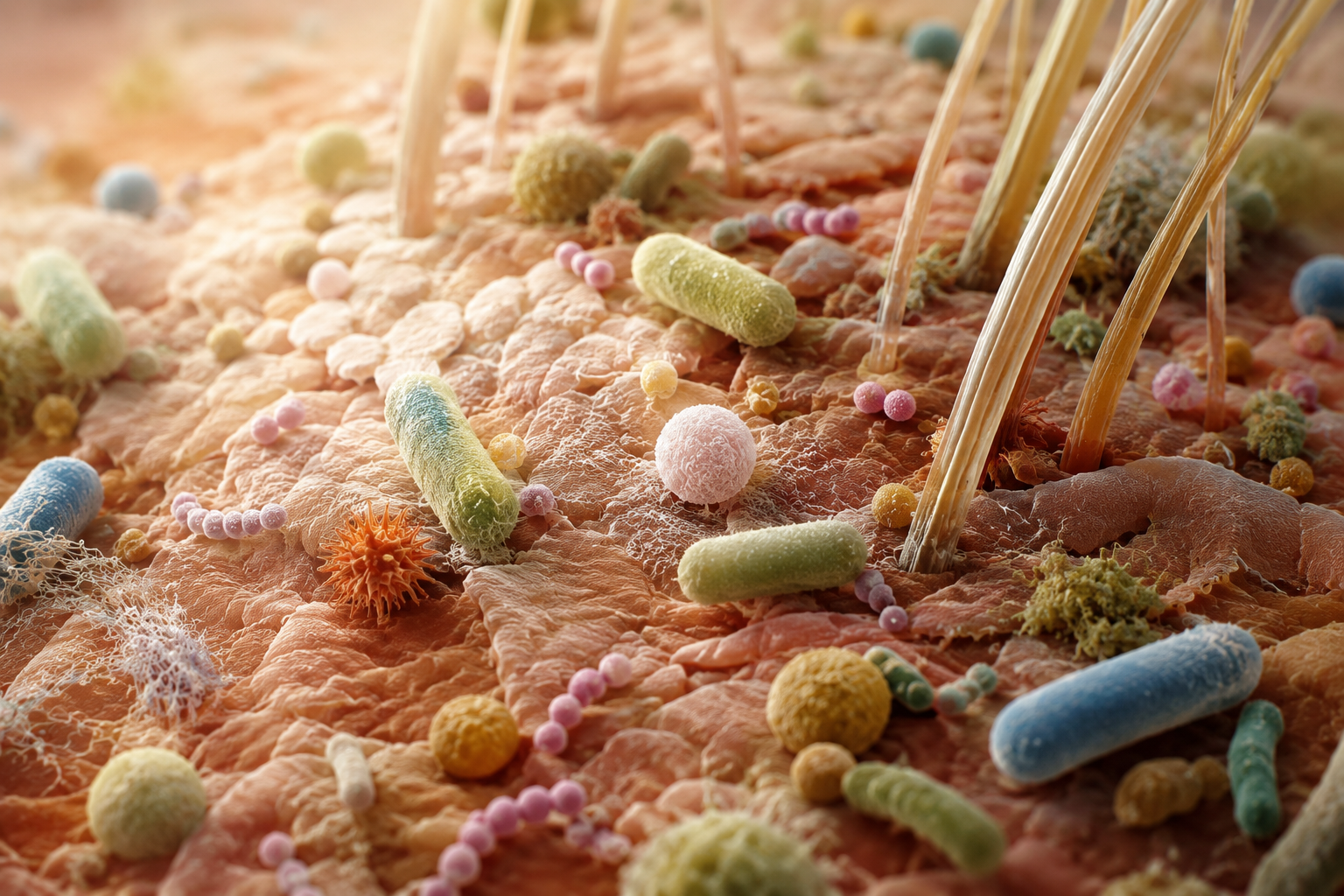
That sounds like an accusation, but it’s more of an observation. The personal care industry built its entire marketing identity around eliminating bacteria from your skin. Antibacterial this. Deep cleansing that. The cleaner the better. The problem is that your skin was never supposed to be sterile. It was never supposed to be a blank surface wiped free of microbial life. It’s an ecosystem, and like every ecosystem on earth, it functions because of the organisms living in it and on it, not despite of them.
Your skin is home to trillions of microorganisms including bacteria, fungi, viruses, and mites that collectively form what scientists call the skin microbiome. These aren’t contaminants. They’re not signs of poor hygiene. They’re residents that have co-evolved with humans over millions of years. They maintain your skin's barrier integrity. They regulate your skin's oil production. They fight off pathogens trying to colonize your skin. They communicate directly with your immune system. They’ve been doing all of this since long before the personal care industry existed and long before anyone thought to market the idea that clean meant sterile.
A 2025 systematic review published in ScienceDirect, drawing on research from PubMed, SCOPUS, Web of Science, and Embase, confirmed four primary functions of the skin microbiome. Maintaining barrier integrity. Modulating lipid homeostasis. Eliminating pathogens. Stimulating appropriate immune responses. In plain language your skin's microbial community is simultaneously serving as a structural engineer, a chemist, a security guard, and an immune system trainer. No product on the shelf does all four of those things. The microbiome does them without being asked.
Andrew Huberman addressed this directly in Episode 183 of the Huberman Lab, stating that the microbiota living on and within the skin serve as a barrier to infections and give the skin nourishment and vibrance, and that you can support the skin microbiome with certain skincare products and habits. He also noted that removing the microbiome barrier through over-cleansing can increase acne. That is a Stanford neuroscientist telling you that the instinct to wash your face more aggressively when you break out may be making your acne worse. The science supports him.
This article is about what the skin microbiome actually is, what disrupts it, what the disruption looks like in your skin, and what you can do about it without abandoning basic hygiene. The answer isn’t to stop washing, it’s to understand what your skin actually needs from the products you use every day.
What the Skin Microbiome Actually Is
The word microbiome gets used a lot in skincare marketing right now. Most of the time it's used as a selling point without much explanation of what it actually means. Here's the plain language version.
Your skin is not a uniform surface. It's a collection of distinct micro-environments, each with its own temperature, moisture level, oil content, and pH. The face is different from the forearm. The armpit is different from the scalp. The skin between your toes is different from the skin on your chest. Each of those environments supports a specific community of microorganisms adapted to those exact conditions. The skin microbiome is not one thing living uniformly across your body. It's hundreds of communities living in conditions they've evolved specifically to inhabit.
The primary residents are bacteria. Thousands of species have been identified on human skin but a relatively small number dominate in healthy skin. Understanding a few of them explains most of what matters.
Cutibacterium acnes lives in the sebaceous follicles where your skin produces oil. At normal population levels it's a beneficial resident. It produces fatty acids that maintain your skin's slightly acidic pH and suppress harmful pathogens. The same organism that gets blamed for acne is, in healthy balanced skin, one of your most important microbial allies. The problem isn't having it on your skin. The problem is the conditions that allow it to overpopulate in clogged follicles where it triggers inflammation.
Staphylococcus epidermidis is one of the most abundant bacteria on healthy skin and one of the most misunderstood. It produces antimicrobial peptides that actively suppress pathogenic bacteria including its dangerous cousin Staphylococcus aureus. It supports barrier function. It communicates with the immune system to calibrate appropriate responses to pathogens. In healthy skin it's one of your most valuable microbial residents. In eczema-prone skin its population is often overtaken by Staphylococcus aureus, which drives the inflammation and barrier breakdown that characterize the condition.
Staphylococcus aureus is the one you don't want in charge. In healthy skin it's kept in check by the broader microbial community including Staphylococcus epidermidis. When the community is disrupted and S. aureus populations expand, the consequences are significant. A 2025 study found that its abundance in atopic dermatitis correlates directly with itch severity and barrier dysfunction. Restoring microbial diversity reduces S. aureus overgrowth and improves clinical outcomes.
Malassezia is a fungal genus that is a normal skin resident but is associated with seborrheic dermatitis, dandruff, and rosacea when it overgrows. Its population is directly influenced by the oils on your skin's surface, which is one of the reasons what you apply topically matters to the microbial balance on your skin.
These organisms are not living independently. They are communicating with each other, competing for resources, producing compounds that affect the skin's chemistry, and collectively maintaining the conditions that keep any single organism from overrunning the whole system. When that balance holds, your skin is resilient. When it breaks down, the clinical name for what follows is dysbiosis.
When the Balance Breaks: What Dysbiosis Actually Means
Dysbiosis is the clinical term for what happens when the skin's microbial community falls out of balance. It's characterized by reduced microbial diversity, overgrowth of specific pathogenic organisms, and loss of the commensal bacteria that normally keep those pathogens in check. A February 2026 article in Dermatology Advisor describes dysbiosis as a hallmark mechanism in inflammatory skin conditions, noting that it's now more consistently associated with acne and other inflammatory conditions than the simple overgrowth of any single organism.
That last point is worth sitting with. For years the story about acne was that Cutibacterium acnes was the villain and killing it was the solution. The emerging research tells a more complicated and more interesting story. It's not the presence of C. acnes that drives acne. It's the loss of the microbial diversity that normally keeps it balanced. The same logic applies across multiple skin conditions and the connections between dysbiosis and those conditions are some of the most important findings in dermatology right now.
Acne
In acne-prone skin, dysbiosis shifts the follicular environment toward pathogenic strains of Cutibacterium acnes and Staphylococcus species. The microbial diversity that normally prevents any single organism from dominating is reduced. Fewer beneficial bacteria means fewer natural checks on C. acnes overgrowth, which means more of the conditions that drive inflammation and breakouts. This is one of the reasons why antibiotics and antibacterial products often produce diminishing results over time. They address the overgrowth without restoring the diversity that prevented it in the first place. We covered the full acne picture in our acne article.
Eczema
Eczema features dramatically reduced microbial diversity with overgrowth of Staphylococcus aureus and loss of beneficial commensals like Staphylococcus epidermidis. A 2024 study published in the journal Allergy found that dysbiosis exists prior to the onset of atopic dermatitis, meaning the microbiome imbalance precedes the visible symptoms. The disruption comes first. The eczema follows. That sequencing matters because it suggests that protecting the skin microbiome is not just a management strategy for existing eczema but potentially a preventive one. We covered eczema in depth in our eczema article.
Rosacea
Rosacea is associated with increased levels of Staphylococcus epidermidis, Demodex folliculorum, and Cutibacterium acnes. The Demodex mite connection we covered in our rosacea article is directly tied to microbiome dysbiosis. The conditions that allow Demodex to overpopulate are the same conditions that characterize a disrupted skin microbiome. It's not a coincidence that rosacea sufferers often find that the products triggering their flares are the same ones most likely to disrupt microbial balance.
Psoriasis
Psoriasis shows enrichment of Firmicutes and Streptococcus and a reduction in Actinobacteria, Corynebacterium, and Lactobacillus compared to healthy skin. The disrupted microbiome interacts with the immune system to compound the inflammatory response already driving the condition. Since psoriasis is fundamentally an immune system condition, the microbiome's direct communication with immune function makes it particularly relevant here. We covered psoriasis in our psoriasis article.
The Pattern Worth Recognizing
Looking across all four conditions, the same pattern emerges. Reduced microbial diversity. Loss of beneficial organisms. Overgrowth of pathogenic ones. Increased barrier dysfunction. Increased inflammation. The specific organisms involved differ between conditions but the underlying mechanism is consistent. Dysbiosis is not a different problem for each condition. It's the same disruption expressing itself differently depending on which organisms gain the upper hand and which barrier functions are most compromised.
This also means that the things that disrupt the skin microbiome are not just problems for people who already have these conditions. They're risk factors for developing them. And the most consistent disruptors aren’t environmental toxins or allergens. They're in the products most people use every single day.
What's Disrupting Your Skin's Microbiome?
This is the section most skincare brands don't want written because the answer to what disrupts the skin microbiome is not just pollution, stress, or aging, though all of those do play a role. The primary disruptors are the products sitting in your shower right now.
SLS and Synthetic Surfactants
Sodium lauryl sulfate and its close relative sodium laureth sulfate are the most documented and most significant disruptors of the skin microbiome in daily personal care products. A peer-reviewed study published in the International Journal of Cosmetic Science found that exposure to SLS at just 0.5 percent concentration for 24 hours in healthy women reduced both barrier protection and beneficial microbial communities on the skin, increasing the risk of dysbiosis. Commercial cleansers typically contain SLS at 10 to 15 percent. The real-world disruption is correspondingly more significant than what the patch study measured.
A January 2026 review in the International Journal of Cosmetic Science put it directly: microbiome-friendly cosmetic formulations should replace harsh surfactants with gentler alternatives capable of removing impurities from the skin without drastically affecting its lipid mantle and consequently the balance of the skin microbiome.
Our bars contain no SLS and no SLES. We covered why those surfactants are in commercial bars in the first place and what else they are doing to your skin in our ingredient label article.
Antibacterial Soap
Antibacterial soaps are the most dramatic disruptors in the category and the most straightforwardly counterproductive for skin microbiome health. By design they kill bacteria indiscriminately. The beneficial commensal bacteria maintaining your microbiome balance are bacteria. The antibacterial active ingredient doesn't distinguish between them and the pathogens it's targeting.
The FDA's position on this has been clear since 2017 and remains unchanged. Antibacterial soap is no more effective than plain soap and water at preventing illness or infection. What it does do is disrupt the microbial community that's actively working on your behalf. The FDA banned 19 antibacterial active ingredients from consumer soap products that year for exactly this reason. Benzalkonium chloride, which we covered in our ingredient label article, remains under ongoing FDA review.
Synthetic Preservatives
Most water-based personal care products including lotions, body washes, and liquid cleansers require synthetic preservatives to prevent bacterial and mold growth in the formula. Parabens and phenoxyethanol are among the most commonly used. Both have documented antimicrobial properties which is precisely why they work as preservatives. The concern is whether those same antimicrobial properties affect the skin microbiome when applied topically. The research on this is emerging rather than definitive but the mechanism of concern is straightforward. An ingredient engineered to kill microorganisms in a bottle doesn't necessarily stop doing so when it contacts your skin.
Our water-free cream formulas contain no synthetic preservatives. We explained why we chose water-free formulation in our body cream article.
Fragrance Compounds
Synthetic fragrance compounds are documented skin sensitizers and have been shown to alter the skin microbiome in peer-reviewed research. The generic word fragrance on an ingredient label can hide dozens of individual chemical compounds at undisclosed concentrations. We covered the full picture of what that single word conceals in our ingredient label article and our chemical article.
Our scented bars use fragrance oils that are a blend of naturally derived and lab-created aroma-safe compounds, phthalate-free, paraben-free, and free of heavy metals, at less than 4 percent of the cured bar. Our Unscented bar contains no fragrance at all. For the full science on what can legally hide behind that word, what the research says about the specific compounds most commonly found in fragrance formulas, and why it matters especially for children, our fragrance article covers it in depth.
Over-Cleansing
This one is less about what's in the product and more about how frequently it's used. The skin microbiome requires time to reestablish its community after cleansing. Twice daily cleansing, the standard dermatologist recommendation, gives the microbiome time to recover between sessions. Cleansing more frequently or using multiple stripping products in sequence disrupts that recovery cycle repeatedly without allowing the community to stabilize.
Andrew Huberman addressed this in Episode 183 of the Huberman Lab, which we referenced in the opening of this article. The instinct to wash more aggressively when you break out is the instinct most likely to make it worse. The research behind that statement is everything we just covered.
pH Disruption
The skin microbiome thrives at the skin's natural slightly acidic pH of 4.7 to 5.5. This pH level supports beneficial bacteria and suppresses pathogenic ones. It’s not accidental. It’s the result of millions of years of co-evolution between human skin and its microbial residents. Alkaline products shift that pH upward and temporarily create conditions less favorable to beneficial bacteria and more favorable to the pathogens that cause problems.
For the full explanation of what skin pH is, how the acid mantle works, and why the recovery window matters for compromised skin, our skin pH article covers it in depth.
We want to be direct here. Cold process soap, including ours, runs at a pH of 9 to 10. That is the nature of true soap chemistry and we've addressed it directly in each of our skin condition articles. The pH disruption from cold process soap is temporary and the skin reestablishes its natural pH relatively quickly after rinsing. That temporary disruption is meaningfully different from the persistent structural barrier damage that SLS causes, but it exists and pretending otherwise would contradict everything we believe in. If you have significantly compromised skin or a diagnosed skin condition, a pH-balanced syndet cleanser is worth discussing with your dermatologist.
The skin microbiome isn’t a marketing concept. It's a biological system that has been maintaining your skin's health since long before anyone thought to put it on a label. The research on what disrupts it is clear and consistent. Harsh surfactants. Antibacterial agents. Synthetic preservatives. Undisclosed fragrance compounds at unknown concentrations. Repeated cleansing that doesn't allow the community time to recover. These aren’t exotic industrial chemicals. They're in the products most people use twice a day without a second thought.
The practical takeaway isn’t complicated. Your skin's microbiome doesn't need help. It needs you to stop disrupting it. That means being more deliberate about what you put on your skin daily, particularly in products that stay on longest, and less focused on achieving a feeling of sterile cleanliness that your skin was never designed to maintain.
What you wash with matters. What you leave on matters more. Both of those choices are worth making with the microbiome in mind rather than against it.
If you want to understand what's in most commercial soap bars and why those ingredients are there, our ingredient label article covers the full decoder. If you want to understand how the microbiome connects to a specific skin condition you're managing, our skin condition articles on eczema, rosacea, psoriasis, and acne each address the microbiome connection for that condition specifically.
For the full picture on how diet specifically shapes the gut microbiome that manages your skin's inflammatory response, our nutrition and skin article covers it in depth.
If you spend time outdoors, our outdoor soap article covers what soap does to aquatic ecosystems, what's already in the fish you're catching, and what the research says outdoor enthusiasts need to know.
That's The Grove. Not a catalog. A library.