.svg)
Menu
More than 16 million Americans have rosacea and most of them weren't diagnosed until their 30s or 40s. Many spent years treating it as acne, dry skin, or general sensitivity before anyone named it correctly. If you have persistent redness on your central face that comes and goes, this blog is worth reading.
What Rosacea Actually Is
Rosacea is a chronic inflammatory skin condition that primarily affects the central face, the nose, cheeks, forehead, and chin. It's not acne. It isn't simply sensitive skin. It is its own condition driven by a combination of an overreactive immune system, abnormal blood vessel behavior, and a compromised skin barrier. The exact cause still isn't fully understood, which is worth acknowledging honestly, but researchers have identified both genetic and environmental factors as contributors.
The most important thing to understand about rosacea is that it's not one thing. It shows up differently in different people, which is one of the main reasons it goes undiagnosed for so long. Someone with persistent facial redness may not recognize that they share a diagnosis with someone who has bumps and pimples, or someone whose eyes are chronically irritated, or someone whose nose has gradually thickened over the years. All four of those presentations are rosacea.
The Four Subtypes
Doctors organize rosacea into four subtypes based on how it primarily presents. The subtypes aren't mutually exclusive, meaning you can have features of more than one at the same time, and many people do.
Subtype 1 is the most common and the one most people picture when they hear rosacea. It shows up as persistent redness and flushing on the nose and cheeks, often with visible small blood vessels just under the skin. The redness comes and goes, frequently triggered by heat, stress, certain foods, or skincare products. Skin in this subtype tends to feel easily irritated and sensitive.
Subtype 2 looks like adult acne. Red bumps and pimples appear on the face without the blackheads that characterize true acne. This distinction matters because the treatments for acne and rosacea are different, and using acne treatments on rosacea skin can actually make things worse. If you've been using acne products for years without much improvement, this subtype is worth discussing with a dermatologist.
Subtype 3 is the rarest and most advanced form. The skin gradually thickens and develops a bumpy texture, most commonly on the nose, creating the enlarged appearance known as rhinophyma. This develops slowly over many years from untreated or undertreated rosacea. It's far less common than the first two subtypes.
Subtype 4 affects the eyes rather than the skin. Eyes feel gritty, dry, and irritated, eyelids may swell, and light sensitivity is common. This is one of the most underdiagnosed forms because people don't naturally connect chronic eye irritation to a skin condition. If you have rosacea and also have persistent eye discomfort, mention it to your dermatologist specifically.
What Makes Rosacea Worse
Rosacea doesn't have a single cause and it doesn't have a single trigger. What sets one person off may not affect another at all. That said, there are patterns that show up consistently across the research and most rosacea sufferers will recognize at least several of these.
Sun exposure is the most universally documented trigger across all four subtypes. UV radiation drives inflammation and flushing in virtually everyone with rosacea. Mineral sunscreen with zinc oxide, worn daily, is consistently recommended by dermatologists as one of the most important protective habits for anyone managing this condition. We covered why mineral sunscreen is preferable to chemical sunscreen in our dermatologist blog if you want the full picture on that.
Temperature extremes are a close second. Hot beverages, hot weather, saunas, hot showers, and cold wind can all trigger flushing. The common thread is anything that rapidly changes the temperature of the skin or causes blood vessels in the face to dilate quickly.
Diet plays a role for many rosacea sufferers. Red wine and alcohol are among the most commonly reported food triggers, along with spicy foods and histamine-rich foods like aged cheeses, cured meats, and fermented products. Not everyone with rosacea reacts to food triggers but it's worth paying attention to patterns in your own experience.
Fragrance compounds in skincare products are consistently listed as a primary rosacea trigger in clinical dermatology literature. This includes both synthetic fragrance and naturally occurring fragrance compounds like limonene and linalool that appear in essential oils and fragrance blends. If your skin flares after using a scented product, fragrance is almost certainly involved.
Harsh surfactants including SLS and SLES damage the skin barrier and trigger inflammation in rosacea-prone skin the same way they do in eczema-prone skin. We covered how these surfactants work and what they do to skin permeability in our chemical blog.
Stress triggers rosacea through a direct neurological pathway. Emotional stress causes the nervous system to release compounds that dilate blood vessels and drive inflammation in the face. The connection between a stressful week and a rosacea flare isn't imagined. It's documented biology.
Physical exercise is a trigger worth knowing about because it's one most people don't expect. Increased body temperature and blood flow to the face during exertion can trigger flushing and inflammation. This doesn't mean you should avoid exercise but it does mean cooling down gradually and rinsing your face with lukewarm water after a workout rather than letting sweat sit on already reactive skin.
Several common skincare ingredients can trigger or worsen rosacea even in products marketed as anti-aging or acne-fighting. Retinoids, benzoyl peroxide, salicylic acid, witch hazel, menthol, and alcohol-based toners are among the most commonly reported. If you have rosacea and have been using any of these without improvement, the products themselves may be part of the problem.
One trigger that surprises most people is microscopic skin mites. A tiny organism called Demodex lives on nearly every adult face in small numbers and is completely normal. In people with rosacea, Demodex populations are significantly higher than normal. Whether this overpopulation causes rosacea or is caused by it is still being studied. What is documented is that treatments targeting these mites, specifically ivermectin, have shown meaningful clinical effectiveness for the bumps and pimples of subtype 2 rosacea. It's worth mentioning to a dermatologist if that's your primary presentation.
The Honest Truth About Soap and Rosacea
We're going to be direct with you here, the same way we were in our eczema blog.
The medical guidance on rosacea and cleansers is clear. The National Rosacea Society, peer-reviewed clinical literature, and dermatologists who specialize in rosacea all point in the same direction: soap-based cleansers generally aren't the best choice for rosacea-prone skin. That applies to all true cold process soap including ours, and we're not going to pretend otherwise.
The reason is the same pH issue we covered in the eczema blog. True soap runs at a pH of 9 to 10. Your skin's natural surface sits at a pH of 4.7 to 5.5. Rosacea skin already has a compromised barrier and an overreactive vascular system. Washing with an alkaline product disrupts that balance further and can trigger the flushing and inflammation that define the condition. Dermatologist Dr. Zoe Diana Draelos, a recognized authority on rosacea skincare, specifically notes that for patients with normal or dry skin, soap removes too much of the skin's natural oil and syndet cleansers are the preferred clinical choice. The National Rosacea Society echoes this, recommending non-soap cleansers for anyone whose skin isn't oily.
What dermatologists recommend instead are syndet cleansers, the same soap-free, pH-balanced options we discussed in the eczema blog, formulated at a neutral pH that doesn't disrupt the skin's natural acid level.
So why are we still talking about our bars at all?
Because there's a meaningful difference between our bars and most of what's sitting on store shelves, and that difference matters for rosacea sufferers even given the pH limitation.
Commercial bars and body washes typically contain synthetic fragrances with undisclosed compounds, SLS and similar harsh surfactants, synthetic preservatives, and synthetic colorants. Every one of those ingredients is a documented rosacea trigger. Our bars contain none of them. Our fragrance oils are a blend of naturally derived and lab-created aroma-safe compounds, phthalate-free, paraben-free, and free of heavy metals, used at less than 4 percent of the cured bar. Our Unscented bar contains no fragrance at all.
The honest position is this. If you have active rosacea, particularly subtype 1 with persistent redness and flushing, a syndet cleanser is the clinically sound first choice. If you have mild rosacea-prone skin and have been reacting to commercial bars, our bars, particularly the Unscented, remove every major trigger ingredient while the pH limitation remains. That's not a perfect solution. It's an honest one.
Where Moisturization Fits
Here is something worth understanding about rosacea that most people don’t think about until a dermatologist tells them. The condition involves a compromised skin barrier, the same fundamental problem we described in the eczema blog, and that barrier dysfunction makes consistent moisturization one of the most important daily habits for anyone managing rosacea. Multiple peer-reviewed sources and clinical management guidelines specifically recommend regular moisturizer use to help reduce barrier dysfunction and decrease the frequency of flares.
This is where our newly launched dry and normal skin cream becomes genuinely relevant. Leave-on moisturization matters more for rosacea management than the cleanser choice, for the same reason it matters more for eczema. The cleanser is on your skin for seconds. The moisturizer stays and does its work.
Our dry and normal skin cream combines organic shea butter, organic jojoba oil, organic coconut oil, organic beeswax, vitamin E, white kaolin clay, and arrowroot powder. Shea butter's cinnamic acid has documented anti-inflammatory properties that are directly relevant to a condition driven by chronic inflammation. Jojoba oil's fatty acid profile supports the skin's own barrier function. Beeswax creates an occlusive layer that physically reduces moisture loss through the compromised barrier that rosacea creates. None of these are drug claims. They are ingredient properties that support what the skin is already trying to do on its own.
One honest note specific to rosacea. Because rosacea-prone skin is highly reactive, we would suggest patch testing any new product including our cream on a small area before committing to full use. What works well for one person's rosacea-prone skin may not work for another's, and the only way to know is to introduce new products carefully and pay attention to how your skin responds.
This cream does not treat rosacea. We are not making that claim. What it does is support barrier repair and sustained moisture retention with clean ingredients and nothing hidden. For anyone managing rosacea day to day, that is a meaningful part of the picture.
We go into the full ingredient story behind this cream, including the research and the formulation decisions, in our body cream article.
Where Our Products Fit Honestly
The Unscented Bar
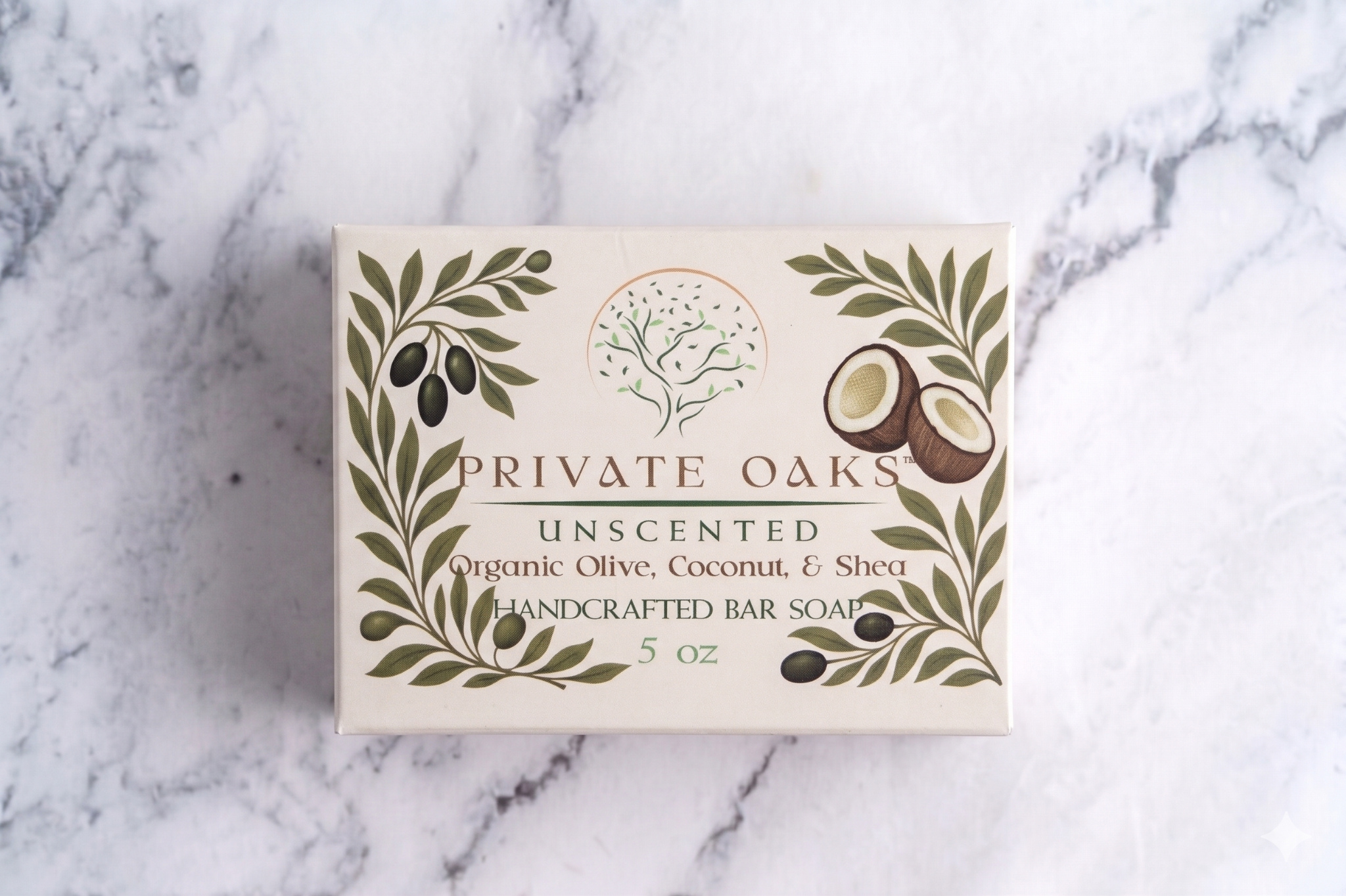
For anyone with rosacea-prone skin who wants a genuinely clean, fragrance-free rinse-off cleanser made with organic oils, our Unscented bar is worth considering. The French green clay does deep detoxifying work. The organic olive oil, organic coconut oil, and organic shea butter are documented skin-compatible ingredients. The retained glycerin supports hydration. And the absence of synthetic fragrances, SLS, synthetic preservatives, and synthetic colorants removes every major trigger ingredient found in most commercial bars.
The pH limitation we covered earlier still applies. If you have active rosacea, particularly subtype 1 with significant flushing and redness, a syndet cleanser is the clinically recommended starting point. Get things settled first and then consider transitioning to our Unscented bar as a maintenance cleanser once your skin is in a more stable place.
If you're new to Private Oaks and your rosacea is mild or mostly triggered by what's in your current commercial products rather than soap itself, start with the Unscented bar. Use it for a few weeks and pay attention. For many people the elimination of fragrance compounds, SLS, and synthetic preservatives makes a noticeable difference even with the pH reality present.
A Note on Our Scented Bars
The same thinking from our eczema blog applies here. If you've never specifically reacted to fragrance but have struggled with commercial bars, our scented bars may be more tolerable than you expect. Our fragrance oils are a blend of naturally derived and lab-created aroma-safe compounds, phthalate-free, paraben-free, and free of heavy metals, used at 3 to 7 percent of total ingredients. Every other ingredient is the same clean formula as the Unscented bar. No SLS. No synthetic preservatives. No stripped glycerin.
That said, fragrance is a documented rosacea trigger and rosacea-prone skin is among the most reactive skin types. If you have active or significant rosacea, the Unscented bar is the honest starting recommendation. Start there, see how your skin responds, and decide from there whether a scented bar is worth trying.
Our Newly Launched Dry and Normal Skin Cream
As we covered in the moisturization section, the leave-on product matters more than the cleanser for rosacea management. Our newly launched dry and normal skin cream is the product in our lineup most directly relevant to what rosacea-prone skin needs day to day.
Pair the Unscented bar with our dry and normal skin cream as your daily routine. Cleanse gently, pat dry without rubbing, and apply the cream while your skin is still slightly damp to help lock in moisture. Give it a few weeks of consistent use before drawing conclusions. Skin barrier repair is a slow process and consistency matters more than any single application. Remember to patch test the cream on a small area first before using it on your full face. Rosacea-prone skin is reactive and introducing any new product carefully is worth the extra few days of caution.
For anyone whose rosacea is significant, persistent, or not responding to changes in their skincare routine, please see a dermatologist. Some presentations genuinely require prescription treatment that no cleanser or moisturizer can replace. We are not trying to be that. We are trying to be the cleanest, most honest option for the daily skincare decisions that sit alongside whatever clinical care you are receiving.
Rosacea is one of those conditions that can quietly reshape how you feel about your own face. The redness that won't settle, the flares that seem to come from nowhere, the products that promise relief and deliver irritation instead. If any of that sounds familiar, we hope this blog gave you something useful, whether that's a better understanding of what's actually happening in your skin, a clearer picture of what's triggering your flares, or simply the knowledge that most of what's sitting on the soap shelf was formulated without your skin type in mind.
We're not going to tell you our products solve rosacea. They don't. What we can offer is a cleanser made with organic oils and nothing that belongs on a rosacea trigger list, and a leave-on cream built around barrier support and clean ingredients. That's a reasonable starting point for daily skincare that works alongside whatever else you're doing to manage this condition.
If your rosacea is significant or not responding to changes in your routine, please see a dermatologist. Early treatment matters for rosacea and the right clinical care makes a real difference.
That's always been the point of Private Oaks. Not to replace what your doctor recommends. To be the cleanest, most honest option for everything in between.