.svg)
Menu
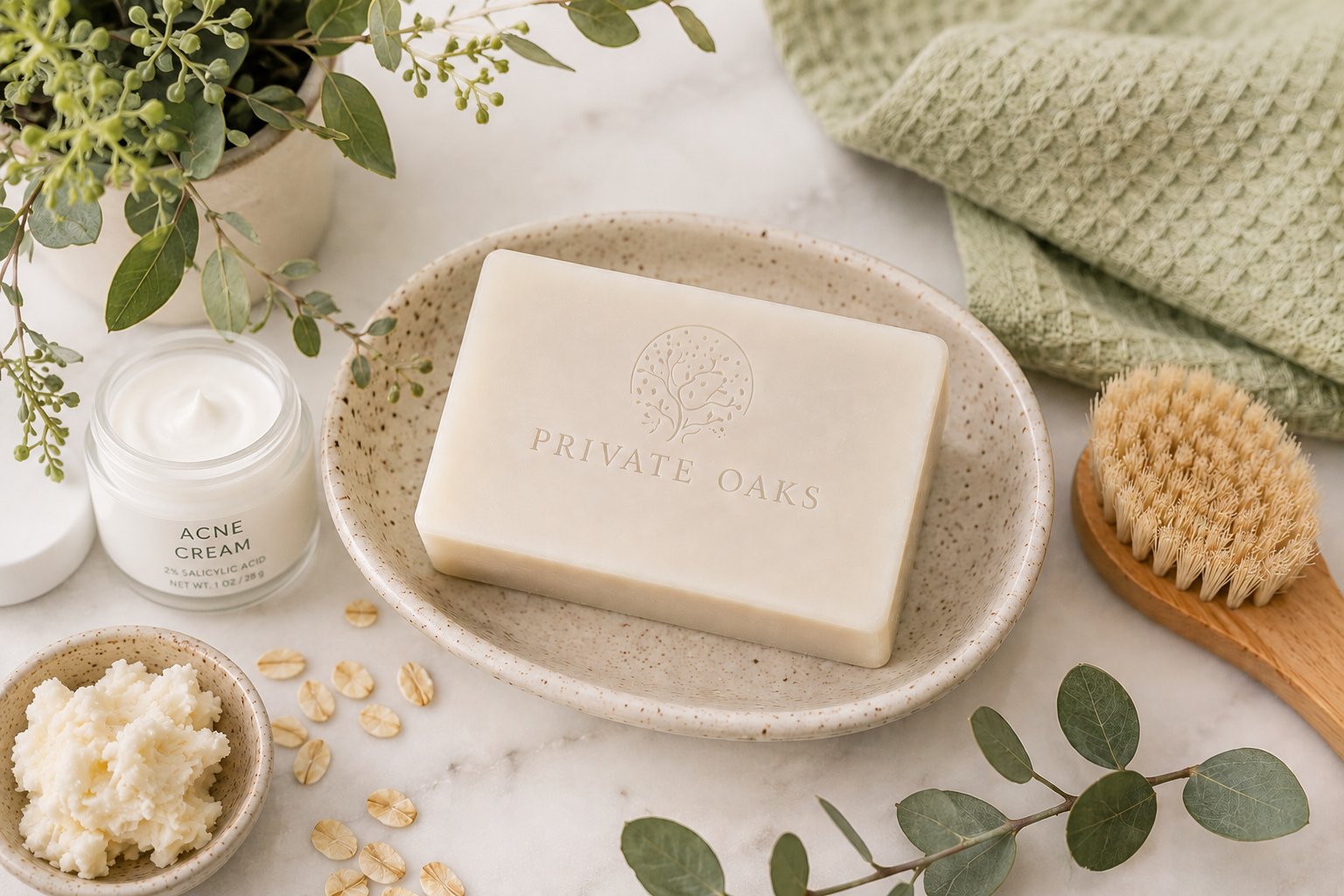
Acne has terrible timing, questionable logic, and absolutely no respect for age. It shows up uninvited in your teens, overstays its welcome into your 30s and 40s, and has the audacity to arrive right before something important. It also has nothing to do with how often you wash your face, despite what every well-meaning relative has ever told you.
Let's talk about what it actually has to do with.
What Acne Actually Is
Acne is the most common skin condition in the United States, affecting 50 million Americans at any given time. While it hits hardest during the teenage years, it follows a significant percentage of adults well into their 30s and 40s. For women specifically, 40 to 50 percent experience acne beyond their teenage years, often driven by hormonal fluctuations that have nothing to do with the skincare products they're using or how frequently they're washing their face.
Understanding what is actually driving acne changes how you approach it. There are four documented mechanisms working together, and they all need to be addressed for meaningful improvement. Targeting just one of them, which is what most over the counter products do, is why so many people spend years cycling through cleansers and treatments without lasting results.
Sebum overproduction. Your skin's oil glands are responding to hormonal signals, particularly androgens, by producing more oil than the skin needs. That excess oil is one of the primary ingredients feeding everything else on this list. Stress, hormonal fluctuations, and diet all influence how much sebum your glands produce at any given time.
Clogged follicles. Dead skin cells inside the hair follicle shed faster than they can exit, combining with that excess sebum to form a plug. When that plug is open to air it oxidizes and turns dark, creating a blackhead. When it stays closed it becomes a whitehead. Both are non-inflammatory acne. When bacteria get involved it becomes the red, angry kind.
Bacterial overgrowth. A bacteria called Cutibacterium acnes lives on everyone's skin in small numbers and causes no problems under normal conditions. In acne-prone skin, particularly when follicles are clogged and sebum is abundant, it multiplies rapidly and triggers an immune response. The bacteria itself isn't the enemy. The conditions that allow it to overgrow are.
Inflammation. The immune system attacks the bacterial overgrowth and the result is the swollen, painful, red lesions most people recognize as acne. Recent research has updated the understanding of when inflammation begins. It was previously thought to follow bacterial colonization but newer studies show inflammatory processes are activated very early, even before visible lesions form. This is part of why acne can be difficult to get ahead of.
None of these four factors operates independently. They interact and amplify each other which is why a single product targeting only one of them rarely produces the results people are hoping for. Acne is a systemic process that happens to show up on your skin. That framing matters for everything that follows in this article.
What You Eat Matters More Than Most People Realize
Here is the part of the acne conversation that dermatologists largely dismissed for decades and are now walking back. Diet matters. Not in the oversimplified "chocolate causes acne" way your relatives probably suggested, but in a specific, documented, mechanistic way that the research has now caught up with.
The strongest evidence is around glycemic index. High glycemic foods, the ones that spike your blood sugar quickly, sugary drinks, white bread, processed snacks, chips, anything that hits your bloodstream fast, trigger a cascade that leads directly to more sebum production. Here is how that pathway works. High glycemic foods spike insulin. Elevated insulin stimulates something called insulin-like growth factor 1. That in turn drives androgen production. Androgens tell your oil glands to produce more sebum. More sebum feeds the bacterial overgrowth and follicle clogging we just described. The connection from what you eat to what shows up on your face is not a myth. It is a documented hormonal pathway supported by multiple randomized controlled trials.
Before we go further on diet, it’s worth taking a moment on the word androgen because it’s one of those terms that sounds more complicated than it needs to be, and most people have a narrower picture of it than the science supports.
Androgens are not just testosterone. They are a group of hormones that includes testosterone, DHEA, DHEAS, androstenedione, and dihydrotestosterone among others. Yes, testosterone is one of them. No, they are not the same as anabolic steroids, though anabolic steroids do work by mimicking androgens. Both men and women produce androgens naturally. In women they are produced by the ovaries and the adrenal glands and play important roles in bone health, muscle function, and reproductive health. The dramatic rise in androgens during puberty in both sexes is the primary reason teenagers experience acne so much more frequently than young children.
Here's the part that surprises most people. Your sebaceous glands, the oil glands in your skin, can produce androgens locally without those androgens showing up in a blood test. This is why most people with hormonal acne actually have normal hormone levels on paper. The problem is not always systemic hormone levels. It is sometimes the local sensitivity of the sebaceous glands to androgens they are producing themselves.
There's also an emerging and genuinely concerning body of research connecting acne to endocrine disrupting chemicals found in plastics and personal care products. BPA from plastic packaging and MEHP, a breakdown product of certain phthalates found in fragranced personal care products, have been shown in peer-reviewed research to act as androgen receptor ligands. In plain language that means they can bind to the same receptors that natural androgens bind to and activate those receptors the same way testosterone does. The result can be increased sebum production through exactly the same pathway we just described. This research is still categorized as emerging and hypothesis-supported rather than definitively proven, but it is published in peer-reviewed journals and it connects directly to what we covered in much more depth in our chemical article.
The practical implication isn’t that every breakout is caused by your shampoo bottle. It’s that the same endocrine disrupting chemicals we have been concerned about for reproductive health and other systemic reasons may also be contributing to hormonal acne through an androgen pathway that most people and most dermatologists have not yet connected to their daily product choices.
The dairy connection is real but less definitive. Multiple large observational studies have found associations between dairy consumption, particularly skim milk, and acne risk. The proposed mechanism involves the hormones naturally present in milk stimulating the same insulin and androgen pathways that high glycemic foods do. However the dairy evidence comes primarily from observational data rather than controlled interventional trials, which means the association is documented but causation is harder to establish. The honest framing is that it's worth paying attention to in your own experience rather than treating it as a universal rule.
What this means practically is that if you have persistent acne and you have not looked at your diet, it's worth looking. Reducing high glycemic foods and paying attention to whether dairy affects your skin are two of the most actionable dietary adjustments the research supports. Neither requires a complete lifestyle overhaul. Just paying attention to patterns over a few weeks can tell you a lot.
For the full dietary picture including the gut-skin axis, the Mediterranean diet research, collagen, omega-3s, and the hydration conversation, our nutrition and skin article covers all of it.
Dr. Soleymani covered the diet and acne connection specifically in the Huberman Lab episode we wrote about in our dermatologist article if you want his specific clinical take on it.
What You Wash With Matters, But Not the Way Most People Think
Here is where the acne conversation gets interesting for us specifically, because acne-prone skin is the one skin condition in this series where the clinical guidance is most favorable to what we actually make.
The American Academy of Dermatology recommends gentle, fragrance-free cleansers for acne-prone skin. Not soap-free specifically. Not syndet-only. Gentle and fragrance-free. That is a meaningful distinction from the guidance for rosacea and eczema where soap-based cleansers are more specifically discouraged. For acne-prone skin the primary concern is what is in the cleanser, not what form it takes.
The pH reality we have discussed throughout this series still applies. All true cold process soap runs at a pH of 9 to 10 and acne-prone skin benefits from a more pH-balanced cleanser where possible. We are not going to pretend that limitation disappears just because the overall guidance is slightly more favorable here. It does not.
But here is what does matter enormously for acne-prone skin and where most commercial cleansers actively make things worse.
Over-cleansing is documented to worsen acne. This is one of the most important and most ignored facts in acne skincare. When you strip the skin's natural oils aggressively, the sebaceous glands respond by producing more oil to compensate. That rebound sebum production creates exactly the conditions that drive acne. Harsh surfactants like SLS and SLES don't just irritate acne-prone skin, they can actively worsen the root cause by triggering the oil overproduction cycle all over again. There’s also a direct connection between fragrance compounds in cleansers and acne. Fragranced commercial products often contain undisclosed fragrance compounds at unknown concentrations, some of which are documented skin sensitizers that can trigger contact dermatitis on already inflamed acne-prone skin. That inflammation compounds existing breakouts and makes them harder to resolve.
Our bars contain no SLS, no SLES, and no heavy metals. Our fragrance oils are a blend of naturally derived and lab-created aroma-safe compounds, phthalate-free, paraben-free, and free of heavy metals, used at less than 4 percent of the cured bar. If you have known fragrance sensitivities our Unscented bar is the honest starting point. If you have acne-prone skin but no specific fragrance sensitivity, our scented bars offer the same clean formula with fragrance handled more carefully than most commercial products would ever disclose.
The French Green Clay Advantage
This is where our Unscented bar has the most specific and documented argument of any product recommendation we have made across this entire skin condition series.
French green clay carries the strongest negative ionic charge of all the clays we use. That ionic charge draws out bacteria, excess sebum, and environmental pollutants from pores more aggressively than any other clay in our lineup. A 2019 study published in the International Journal of Cosmetic Science found that illite clay, which is the scientific name for French green clay, reduced sebum production by 40 percent over four weeks of regular use. Forty percent! In a rinse-off product used once a day!
We covered the full science behind why clays work the way they do, including the ionic exchange mechanism that makes French green clay so effective on congested and acne-prone skin, in our clays and salts article.
Our Unscented, Smoked Leather, and Forest Fantasy bars all feature French green clay as their primary clay ingredient. Each one was formulated specifically with oily and acne-prone skin in mind. The Unscented bar is the fragrance-free option for anyone with sensitivities. Smoked Leather and Forest Fantasy bring that same French green clay foundation to scented bars for those who want the acne-fighting clay benefit without giving up fragrance entirely.
The Soap Sleeve and Washcloth Question
One question that comes up regularly, including at craft fairs, is whether a soap sleeve does anything different from a washcloth. The answer: not really. Both provide gentle physical exfoliation that helps remove the dead skin cells sitting on the surface, the same cells that combine with sebum to clog follicles. In the context of acne management, that gentle daily exfoliation is genuinely useful. Dr. Soleymani discussed exfoliation and skin cell turnover specifically in the episode we covered in our dermatologist article.
The difference between a soap sleeve and a washcloth is practical rather than functional. The sleeve holds the bar, dries quickly when hung, and doesn’t sit in a damp pile on the shower shelf. If you already use a washcloth and it works for you, keep using it. If you want something that holds your bar and dries faster, that is what our sleeve does. Neither is wrong, and we would rather tell you that than oversell a product you don’t need to buy.
There is also a broader skin health reason to pay attention to dead skin cell accumulation beyond acne specifically. We covered this in detail in our dermatologist article but it’s worth mentioning here. The dead skin cells that sit on the surface longest are the ones most exposed to UV radiation and environmental damage, and therefore the ones most likely to carry mutations before they are shed. Dr. Soleymani discussed this in the context of why regular gentle exfoliation is not just a cosmetic habit but a genuine skin health practice. Helping your skin shed those cells efficiently every day is one of the simplest things you can do for your skin's long term health, not just its appearance.
Where Our Products Fit
We covered the cleanser conversation in detail above. The short version is this. Start with our Unscented bar if you have acne-prone skin, fragrance sensitivities, or both. If you have acne-prone skin without specific fragrance sensitivities, our scented bars use the same clean formula with fragrance handled more carefully than most commercial products would ever disclose. For oily and acne-prone skin specifically, our Smoked Leather and Forest Fantasy bars are built around French green clay and are available now.
The more important product conversation for acne-prone skin is the one most people overlook entirely. It is not what you wash with. It is what you leave on.
Our Acne-Prone Skin Cream
This is where the product conversation gets genuinely specific in a way it hasn't been in the other skin condition articles in this series.
Our newly launched acne-prone skin cream was formulated with one skin type specifically in mind. It contains organic shea butter, organic jojoba oil, organic beeswax, vitamin E, white kaolin clay, arrowroot powder, borage oil, and high-linoleic safflower oil. Three of those ingredients deserve a closer look because they were chosen specifically for what the research says about acne-prone skin's biology, not just because they're gentle or feel nice. For the full science behind why those specific oils were chosen and the enzyme pathway they address, our acne-prone cream article goes into the detail this article only touches on.
People with acne-prone skin have measurably lower levels of linoleic acid in their sebum compared to people without acne. Linoleic acid is an omega-6 fatty acid that plays a documented role in maintaining the skin barrier and regulating sebum composition. When linoleic acid is deficient, sebum becomes thicker, stickier, and more likely to clog follicles. High-linoleic safflower oil directly addresses that deficiency. This isn't a general skin-compatible oil included because it feels nice. It's an ingredient chosen specifically because of what the research says about acne-prone skin's lipid profile.
Borage oil is the highest plant-based source of gamma-linolenic acid, known as GLA, a fatty acid with documented anti-inflammatory properties. Inflammation is the fourth driver of acne we described at the top of this article. Using a leave-on product with a meaningful anti-inflammatory ingredient addresses that driver at the skin level between cleansing sessions.
Jojoba oil deserves its own mention here because it works differently depending on your skin type and that difference matters for acne-prone skin specifically. Jojoba is technically a wax ester rather than a traditional oil, and its molecular structure mimics human sebum more closely than any other plant-based ingredient. In dry skin that mimicry primarily functions as moisturization, replenishing what the skin is missing. In oily and acne-prone skin something more interesting happens. Because jojoba so closely resembles the skin's own sebum, applying it topically can signal the sebaceous glands that adequate oil is already present, naturally reducing overproduction. A clinical study found that jojoba oil reduced sebum secretion by 23 percent after 28 days of regular application on oily and acne-prone skin. That sebum-regulating property is exactly what acne-prone skin needs from a leave-on product and it's why jojoba oil is in both of our creams but plays a distinctly different role in the acne-prone formula.
Coconut oil, which is in our dry and normal skin cream, is deliberately excluded from the acne-prone formula. Coconut oil has a comedogenic rating that makes it potentially pore-clogging in leave-on applications for acne-prone skin. We made that call intentionally and we want you to know why.
This cream doesn't treat acne. We're not making that claim. What it does is supports the skin barrier, addresses a documented linoleic acid deficiency common in acne-prone skin, and delivers anti-inflammatory fatty acids in a leave-on formula with clean, organic ingredients and nothing hidden. Pair it with our Unscented bar as your daily routine. Cleanse gently, pat dry, and apply the cream while your skin is still slightly damp.
Patch test before committing to full use. Acne-prone skin can be reactive to new products even clean ones, and introducing anything new carefully is always worth the extra few days of caution.
One more note on our cream lineup. Our acne-prone skin cream is also available in scented versions for those who want fragrance as part of their daily routine. Our fragrance oils are a blend of naturally derived and lab-created aroma-safe compounds, phthalate-free, paraben-free, and free of heavy metals, used at less than 2 percent of the finished cream. That is an even lower concentration than our bars. If you have acne-prone skin without significant fragrance sensitivities and you want a scented leave-on option, the scented versions of our acne-prone cream are formulated with the same intentionality as everything else we make. If fragrance sensitivity is part of your picture, the Natural version is the honest choice.
We go into the full ingredient story behind this cream, including the research and the formulation decisions, in our body cream article.
Acne is frustrating in a way that's hard to explain to someone who hasn't dealt with it. It's not dangerous. It's not life threatening. But it shows up on the most visible part of your body, it doesn't respond predictably to treatment, and it has a way of arriving at exactly the wrong moment. If you've been managing it for years you already know that no single product, diet change, or skincare routine is going to solve it completely. We know that too.
What we hope this article gave you is a clearer picture of what's actually driving it, from the hormonal pathways and dietary connections most people haven't heard explained clearly, to the endocrine disrupting chemicals that may be contributing in ways most dermatologists haven't connected yet, to what the research actually says about what you wash with and what you leave on.
Our role in all of this is specific and honest. A bar of soap made with organic oils, no SLS, no SLES, no heavy metals, and fragrance handled more carefully than most commercial products. A leave-on cream formulated specifically around the lipid deficiencies and inflammatory drivers documented in acne-prone skin. Neither of those things treats acne. They're tools for a daily routine that doesn't add to the problem while you address the root causes that only clinical care and lifestyle changes can reach.
If your acne is moderate to severe, persistent, or significantly affecting your quality of life, please see a dermatologist. The prescription options available today, from topical retinoids to hormonal therapy to targeted antibiotics, are meaningfully more effective than anything available over the counter. A dermatologist who takes acne seriously can make a real difference and you deserve that level of care.
That's always been the point of Private Oaks. Not to replace what works clinically. To be the cleanest, most honest option for everything in between.