.svg)
Menu
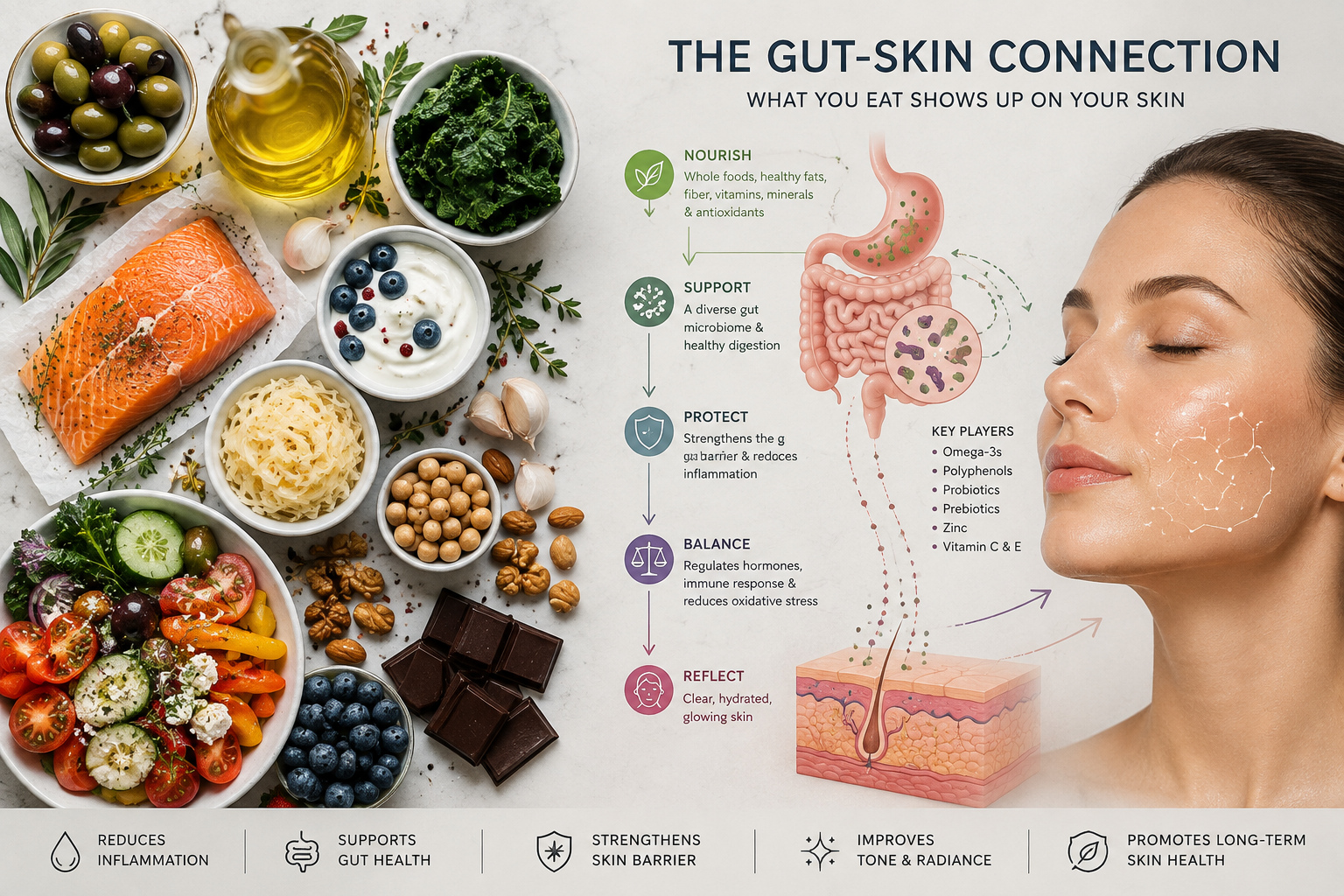
Whatever you ate this week is already showing up on your face. Not metaphorically. The skin you'll be wearing in four weeks is being built right now from the nutrients, inflammatory signals, and microbial inputs your body is processing today. Your skin replaces itself completely every 28 days. We covered that in our dermatologist article. What most people never connect to that fact is that the quality of the skin being built during those 28 days is directly influenced by what you’re eating, drinking, and doing to your gut microbiome while it's being built.
This isn’t a new idea. The connection between diet and skin health has been building in peer-reviewed literature for decades. What is new is how specific and how actionable that research has become. A 2025 randomized controlled trial reduced psoriasis severity by 75 percent in nearly half of all participants through diet alone. No prescription. No drug. A dietary intervention producing a result that most people associate with pharmaceutical treatment. That finding deserves more attention than it gets and it's far from the only one worth knowing about.
Andrew Huberman dedicated Episode 183 of his Huberman Lab podcast, his July 1 2024 solo episode on skin health, to covering what the science says about nutrition and skin. We've pulled the most important findings from that episode alongside the peer-reviewed research behind them. Some of it will confirm what you already suspected. Some of it will surprise you. And at least one piece of conventional wisdom about hydration that millions of people follow every day isn’t only wrong, but potentially harmful.
This article covers what the research actually says. Not what supplement companies want you to believe. Not what wellness influencers are posting. What the peer-reviewed literature and a Stanford neuroscientist say about the relationship between what you consume and the skin you're living in.
Your Gut and Your Skin Are Talking. Most People Don't Know That.
There is a bidirectional communication pathway between your gut and your skin that researchers now call the gut-skin axis. It sounds like a wellness buzzword. It isn't. It's a documented biological mechanism that explains why what you eat shows up on your face in ways that have nothing to do with direct nutrient delivery to skin cells.
Here’s how it works. Your gut houses trillions of microorganisms, the gut microbiome, that play a central role in regulating your immune system. Approximately 70 percent of your immune system lives in or around your gut. When the gut microbiome is balanced and diverse, it sends anti-inflammatory signals through the immune system that reduce systemic inflammation throughout the body including in the skin. When the gut microbiome is disrupted, which researchers call gut dysbiosis, it sends pro-inflammatory signals instead. Those signals travel through the bloodstream and show up in the skin as increased redness, sensitivity, barrier dysfunction, and worsened inflammatory skin conditions.
A December 2025 peer-reviewed narrative review confirmed that atopic dermatitis features barrier impairment, immune dysregulation, and gut-skin dysbiosis working together as a system rather than independently. The gut isn't just passively involved in skin health. It's actively driving the inflammatory environment that determines how reactive, resilient, or compromised your skin is at any given time.
We covered the skin side of this equation in our microbiome article. The gut side is equally important and it's where diet enters the picture most directly. What you eat either feeds the beneficial bacteria maintaining that anti-inflammatory balance or it feeds the pathogenic bacteria disrupting it. There is no neutral choice. Every meal is either supporting the gut-skin axis or working against it.
The practical implications of this are more significant than most skincare conversations acknowledge. Fiber feeds beneficial gut bacteria, low-sugar fermented foods directly introduce beneficial organisms into the gut, and high glycemic and processed foods feed pathogenic bacteria, spike insulin, and drive systemic inflammation that reaches the skin within the same 28-day cycle your skin is using to rebuild itself. Andrew Huberman addressed this directly in Episode 183, recommending 1 to 4 servings of low-sugar fermented foods daily specifically for their gut microbiome benefits and their downstream effect on skin inflammation. The research behind that recommendation is peer-reviewed and consistent.
The gut-skin axis is also why the nutrition advice in this article isn’t just about individual nutrients. It's about the overall pattern of what you eat and what that pattern does to the microbial environment that’s managing your inflammatory response around the clock. A single meal doesn't change your skin. A consistent dietary pattern changes the gut microbiome that changes the immune signals that change what your skin does with the next 28-day cycle it's given to work with.What's Making Your Skin Worse Without You Knowing It
Most people managing a skin condition are focused on what they're putting on their body. The research says the more important question is often what they're putting in their body. Here are the dietary patterns and specific inputs that the peer-reviewed literature most consistently connects to worse skin outcomes.
High Glycemic Foods
This is the most documented and most directly mechanistic diet-skin connection in the research. High glycemic foods are foods that spike your blood sugar quickly. White bread, sugary drinks, processed snacks, white rice, most breakfast cereals, and anything made with refined flour all qualify. When blood sugar spikes, insulin follows. Elevated insulin stimulates insulin-like growth factor 1, known as IGF-1. IGF-1 drives androgen production. Androgens signal the sebaceous glands to produce more oil. More oil combined with the follicle-clogging and inflammatory drivers of acne creates the perfect conditions for breakouts.
We covered this pathway in detail in our acne article and in our acne-prone cream article where the same insulin pathway connects to the delta-6-desaturase enzyme that affects sebum composition. The dietary and topical approaches to acne are addressing the same underlying biology from different directions.
The high glycemic connection isn't limited to acne. A systematic review published in 2024 found that high glycemic dietary patterns consistently correlated with worse outcomes across acne, rosacea, and inflammatory skin conditions generally. The mechanism is systemic inflammation driven by the insulin and IGF-1 pathway, which affects every inflammatory skin condition, not just acne.
Dairy — A More Nuanced Story Than You've Heard
The dairy and skin connection is real but more complicated than most sources present it and the details matter.
The research documenting an association between dairy and acne used conventional pasteurized dairy in virtually every case. A 2025 peer-reviewed article in the Journal of Integrative Dermatology found that dairy processing meaningfully changes milk's biological activity in ways directly relevant to skin. Homogenization disrupts the milk fat globule membrane, a complex structure with anti-inflammatory properties. Pasteurization and ultra-high-temperature processing denature heat-sensitive proteins and modify peptide fragmentation. The processing that produces the dairy most people consume daily strips out some of the bioactive compounds that make unprocessed whole dairy behave differently in the body.
The association is also strongest with skim and low-fat milk rather than whole fat dairy. Skim milk contains a higher proportion of whey proteins relative to fat, which amplifies the postprandial insulin and IGF-1 response that drives acne. Whole fat dairy has a weaker association. Fermented dairy like yogurt and kefir, which introduce beneficial bacteria rather than disrupting the gut microbiome, may actually support rather than worsen skin health through the gut-skin axis.
Whether raw grass-fed dairy behaves differently from conventional pasteurized dairy is a question the research hasn't directly answered in controlled trials yet. The mechanistic case for why it might is compelling. A peer-reviewed study published in Nutrients found that consuming raw milk significantly increased Lactobacillus abundance in the human gut microbiome. Given what we know about the gut-skin axis, that finding is relevant to skin health even if it hasn't been directly tested in a skin outcome study. The parallel to what harsh surfactants do to the skin microbiome is not a coincidence. Pasteurization strips beneficial bacteria from milk the same way SLS strips them from skin.
Chocolate — The Clarification Nobody Gives You
The conventional wisdom that chocolate causes acne is oversimplified to the point of being misleading. The accurate version is more interesting.
The original association was with milk chocolate, which is high glycemic due to sugar content and contains dairy, both of which are documented acne triggers through the pathways already described. It was never cocoa itself that was the problem. It was what surrounds cocoa in most commercial chocolate products.
Dark chocolate, particularly varieties with 85 percent cacao or higher, contains polyphenols and flavonoids with documented anti-inflammatory properties. At those concentrations the sugar content is low enough that the glycemic impact is minimal and the dairy content is negligible. High cacao dark chocolate is not the same product as the milk chocolate bar that got blamed for teenage acne. If you've been avoiding all chocolate because of the skin association, the nuance matters.
Alcohol
Alcohol's effects on skin are documented across multiple conditions and the mechanisms are direct. Alcohol is a vasodilator, meaning it expands blood vessels. For rosacea sufferers this is one of the most consistent and immediate triggers for flushing and flare. We covered this in our rosacea article.
Beyond rosacea, alcohol disrupts the gut microbiome by feeding pathogenic bacteria and depleting beneficial ones, which sends pro-inflammatory signals through the gut-skin axis. It also drives oxidative stress that accelerates collagen breakdown in the dermis, contributing to accelerated skin aging. Huberman addressed this directly in Episode 183, noting that alcohol exacerbates skin issues across multiple conditions. The research consistently supports that position.
Excess Whey Protein
This one affects a specific audience but it's worth knowing about. Whey protein is derived from dairy and has a high insulinogenic effect, meaning it drives a significant insulin response even without accompanying carbohydrates. That insulin spike activates the same IGF-1 and androgen pathway that high glycemic foods activate. People who consume large amounts of whey protein supplements, particularly common in fitness communities, often notice worsened acne without connecting the source.
Huberman specifically flagged excess whey protein in Episode 183 as a documented acne exacerbator. If you're consuming significant amounts of whey protein and experiencing persistent acne, the connection is worth investigating before assuming the cause is topical.
Processed Foods and Western Dietary Patterns
The research on overall dietary patterns consistently shows that Western dietary patterns, characterized by high glycemic foods, processed ingredients, refined oils, excess sugar, and low fiber, correlate with worse skin outcomes across acne, rosacea, eczema, and psoriasis. The mechanism is cumulative. Each individual component drives some degree of gut dysbiosis, systemic inflammation, or hormonal disruption. Combined across three meals a day, seven days a week, the aggregate effect on the gut-skin axis is significant.
This isn't about individual foods being categorically forbidden. It's about the overall pattern your diet creates in your gut microbiome and your inflammatory environment. A single processed meal doesn't change your skin. A consistent dietary pattern of them changes the gut microbiome that manages your inflammatory response around the clock.What Actually Helps Your Skin From the Inside Out
The research on diet and skin isn’t all cautionary. The same peer-reviewed literature that documents what makes skin worse also points clearly toward what makes it better. The pattern that emerges across conditions and across study designs is remarkably consistent. Anti-inflammatory whole food diets improve skin outcomes. Here's what that means specifically.
The Mediterranean Diet — The Strongest Evidence in the Research
If there's one dietary pattern with the most consistent and most dramatic evidence for skin health benefits, it's the Mediterranean diet. The 2025 randomized controlled trial we mentioned in the opening deserves its full context here.
Researchers in Madrid conducted a 16-week trial testing the Mediterranean diet in patients with mild to moderate psoriasis. The results were striking enough that they deserve to be stated clearly. 47.5 % of the Mediterranean diet group achieved PASI 75, which means a 75% reduction in psoriasis severity. 0% of the control group achieved that level of improvement. That’s not a modest effect, that’s a clinically meaningful result from a dietary intervention for a condition most people manage exclusively with prescription medication.
The Mediterranean diet isn't complicated. It's built around olive oil as the primary fat, abundant vegetables and fruits, legumes, whole grains, fatty fish 2-3 times per week, moderate amounts of whole fat dairy and eggs, minimal red meat, and minimal processed foods. The anti-inflammatory effect comes from the combination of omega-3 fatty acids from fish, polyphenols from olive oil and vegetables, fiber feeding beneficial gut bacteria, and the near absence of the high glycemic and processed foods driving the inflammatory pathways we covered in the previous section.
For anyone managing psoriasis, eczema, rosacea, or acne this dietary pattern is the single most evidence-backed nutritional intervention available without a prescription. It's also the dietary context in which most of the other specific nutrients we're about to discuss naturally appear.
Omega-3 Fatty Acids
Omega-3 fatty acids are among the most consistently documented anti-inflammatory nutrients in the research and their benefits for skin specifically are well supported across multiple study designs.
EPA and DHA, the omega-3s found in fatty fish like salmon, mackerel, sardines, and anchovies, incorporate directly into epidermal phospholipid membranes where they modulate inflammatory responses, reduce UV-induced damage, and improve skin barrier function. A 2025 systematic review found that oral omega-3 supplementation reduced inflammatory markers in acne, psoriasis, and atopic dermatitis. A 2024 prospective intervention study found meaningful improvements in acne patients supplementing with omega-3s.
The evidence is stronger for omega-3s from whole food sources than from supplements specifically. 2-3 servings of fatty fish per week is the most consistently recommended approach across dermatology and nutrition literature. For people who don't eat fish, flaxseeds, walnuts, and chia seeds provide ALA, a plant-based omega-3 that the body can partially convert to EPA and DHA, though the conversion rate is limited.
The gut-skin axis connection is relevant here too. Omega-3s support the gut microbiome which in turn reduces the systemic inflammation that reaches the skin. The benefit isn't always direct. It's often mediated through the same microbial and immune pathways we covered in the gut-skin axis section.
Fermented Foods
Low-sugar fermented foods are one of the most direct dietary interventions for the gut-skin axis. Kimchi, sauerkraut, kefir, plain yogurt, miso, and kombucha all introduce beneficial bacteria directly into the gut microbiome. Huberman specifically recommends 1-4 servings daily in Episode 183 for their gut microbiome benefits and downstream effect on skin inflammation.
The research supports this recommendation. A December 2025 peer-reviewed review found that probiotics modestly improve eczema severity and pruritus particularly in pediatric populations. The effect works through immune system modulation, meaning the bacteria introduced through fermented foods communicate with the immune system to reduce the inflammatory response driving skin conditions.
The low-sugar qualifier matters. Many commercially available fermented drinks and yogurts contain significant added sugar that feeds pathogenic bacteria and undermines the probiotic benefit. Plain, unsweetened versions of these foods deliver the benefit. Sweetened versions may cancel it out.
Dark Leafy Greens and Colorful Vegetables
Dark leafy greens including spinach, kale, arugula, and Swiss chard provide folate, vitamins A, C, and K, and a range of antioxidants that protect skin cells from oxidative damage. Vitamin A specifically is a precursor to retinol, the skin renewal compound we covered in the dermatologist article. Getting vitamin A from whole food sources like leafy greens and orange vegetables provides the body with provitamin A carotenoids that it converts as needed, which avoids the toxicity risk that comes with high-dose vitamin A supplementation.
Colorful vegetables and fruits, the deeper and more varied the color the better, provide polyphenols and flavonoids that reduce systemic inflammation and protect against UV-induced oxidative damage in the skin. The diversity of color reflects diversity of phytonutrient content and diversity of anti-inflammatory mechanisms working simultaneously.
This is the part of the nutrition and skin conversation that rarely makes it into a skincare article. It's not as commercially interesting as a specific supplement recommendation, but the research on whole food plant diversity and inflammatory skin conditions is consistent and meaningful.
Collagen — The Honest Conversation
Collagen is one of the most marketed supplements in the skincare space and one of the most misunderstood. Getting this one right requires distinguishing between two very different products that share a name.
Standard collagen supplements are large intact protein molecules that your digestive system breaks down into individual amino acids, which then enter the bloodstream and are used wherever the body needs protein. Gary Brecka, a human biologist who has appeared extensively on Joe Rogan and other major podcasts, has made this point publicly, and he's right about standard collagen. Your body doesn't selectively route those amino acids to your skin any more than it selectively routes the protein from a chicken breast to your face. Standard collagen is for all practical purposes just another protein supplement.
Hydrolyzed collagen is a different product with a meaningfully different mechanism. The word hydrolyzed means pre-broken. Through an enzymatic process before you ever consume it, the collagen is broken into small peptide fragments, specifically dipeptides and tripeptides like Pro-Hyp and Hyp-Gly. Those smaller fragments survive digestion intact, enter the bloodstream as peptides rather than individual amino acids, and research shows they distribute into the dermis where they act as signaling molecules that stimulate fibroblasts to produce new collagen, elastin, and hyaluronic acid. The hydroxyproline amino acid found almost exclusively in collagen and gelatin serves as both a structural substrate and a signaling molecule in the dermis. Standard dietary protein doesn't provide hydroxyproline in meaningful amounts. This is why hydrolyzed collagen isn't simply a more expensive version of whey protein, itt’s delivering a specific compound your body can't get from most other dietary sources.
One important distinction worth understanding here is the same principle we discussed with omega-3s. Nutrients from whole food sources come packaged with companion compounds and cofactors that enhance absorption and utilization in ways isolated supplements can't always replicate. Bone broth, for example, provides hydrolyzed collagen peptides alongside glycine, proline, and minerals in a food matrix that supports their utilization. A hydrolyzed collagen supplement delivers the peptides in isolation. Both have documented mechanisms but whole food sources of collagen have the same bioavailability advantage that whole fish has over fish oil capsules.
Huberman recommends 15 to 30 grams of hydrolyzed collagen daily alongside 5 to 15 milligrams of vitamin C, which enhances collagen synthesis, in Episode 183. Multiple peer-reviewed studies and meta-analyses support meaningful improvements in skin hydration, elasticity, and wrinkle reduction from hydrolyzed collagen specifically.
Here's the caveat worth knowing before you reach for a supplement. A 2025 meta-analysis published in the American Journal of Medicine analyzed 23 randomized controlled trials and found that when the funding source was accounted for, industry-funded studies consistently showed significant positive effects while independent high-quality studies showed no effect. The collagen supplement market is worth billions of dollars, and the research it funds reliably shows the results that sell products. Independent high-quality research tells a more complicated story.
The honest position is that hydrolyzed collagen has a more specific and plausible mechanism than standard collagen supplements, the peptide research is genuinely interesting, and some well-designed studies show real benefits, but the independent high-quality evidence is less conclusive than the marketing suggests. If you're going to supplement collagen for skin benefits, hydrolyzed is the only form with a documented mechanism for skin-specific activity, vitamin C alongside it consistently enhances the benefit, and whole food sources like bone broth have the same bioavailability advantage over powder supplements that whole fish has over fish oil capsules.
The Hydration Conversation Nobody Is Having
Drink more water. It's the most universal piece of health advice given and one of the least examined. The relationship between water intake and skin health is more nuanced than the wellness industry suggests and at least one piece of conventional hydration wisdom that millions of people follow daily isn’t only wrong but potentially harmful.
Does Drinking More Water Actually Improve Skin?
The short answer is that adequate hydration matters but more water beyond adequate doesn't give you better skin. A 2018 systematic review published in Skin Research and Technology analyzed six controlled studies and found that additional water intake produces a measurable increase in stratum corneum hydration and deep skin hydration, but the effect was most pronounced in people who were already drinking less water than their bodies needed. For people who are adequately hydrated to begin with, drinking more water produced minimal additional skin benefit.
Water doesn't travel directly to the skin when you consume it. It moves through the digestive system, enters the bloodstream, gets filtered by the kidneys, and is distributed throughout the body with vital organs prioritized over the skin. The dermis contains approximately 70 percent water and houses the collagen, elastin, and hyaluronic acid that give skin its structure and elasticity, but the research consistently shows that applying a moisturizer has a far greater impact on skin hydration than increasing water intake alone. The skin's outer layer doesn't have its own blood supply, so water must travel a long path to reach it, and the body doesn't preferentially route excess water to the skin.
Adequate hydration supports skin health indirectly through good circulation, nutrient delivery to skin cells, and efficient removal of metabolic waste that can contribute to inflammation. Those are real, meaningful benefits. They just don't require drinking beyond what your body actually needs.
The 8 Glasses a Day Myth
The 8 glasses of water per day recommendation, which amounts to approximately 128 ounces or nearly 4 liters of plain water daily, is not based on peer-reviewed science as a universal standard. It originated from a 1945 US Food and Nutrition Board recommendation that was widely misinterpreted. The original recommendation stated that most of that quantity is contained in prepared foods, meaning it was never intended as 8 glasses of plain water on top of normal food and beverage consumption. That context was dropped somewhere along the way and the number survived without it.
Individual hydration needs vary significantly based on body size, activity level, climate, diet, and health status. A sedentary person in a cool climate eating a diet rich in fruits and vegetables has genuinely different hydration needs than an endurance athlete training in summer heat. Treating those two people identically with an 8 glasses per day prescription makes no physiological sense.
The Clear Urine Myth — And Why It's Worth Correcting
The advice to drink until your urine is clear is one of the most widespread and potentially harmful pieces of hydration guidance circulating right now. Clear urine is not a sign of optimal hydration. It's a sign of over-hydration.
When urine is completely clear it means the kidneys are excreting water so rapidly that the urine is almost entirely diluted of waste products, electrolytes, and minerals. The body is processing more water than it needs, and the kidneys are working overtime to remove the excess. Pale yellow, the color of light lemonade or light straw, is what peer-reviewed nephrology and urology literature consistently identifies as the target. That color indicates the kidneys are filtering waste effectively while maintaining appropriate electrolyte concentration. Dark yellow or amber signals dehydration. Clear signals over-hydration.
The drink until clear message spread widely through fitness culture and social media without clinical basis, and it has real consequences for people who follow it rigorously.
What Over-Hydration Actually Does
Over-hydration in otherwise healthy people is more common and more harmful than most people realize, and the mechanism is worth understanding.
When you consume more water than your kidneys can process, approximately one liter per hour for average healthy adult kidneys, the excess water dilutes sodium and other electrolytes in your bloodstream. Sodium is the primary electrolyte regulating fluid balance inside and outside cells. When sodium levels drop below a critical threshold, a condition called hyponatremia, fluid moves into cells and tissues throughout the body. The result is cellular swelling and edema, which is fluid accumulation in the tissues, including the subcutaneous tissue layer beneath the skin.
This is not a theoretical concern or a condition limited to people with kidney disease. A healthy 39 year old woman we know developed severe edema throughout her arms and legs from chronically drinking excessive water daily because she believed “the more water the better.” Her kidneys were under significant strain as they struggled to process the volume, and her electrolytes were being continuously diluted. It took weeks to months for the fluid to subside and her kidney function to normalize. She had no underlying kidney disease. She had simply been following the drink more water advice past the point where her body could manage it.
The Merck Manual specifically notes that when excess fluid volume occurs it can accumulate in tissues and organs. The Cleveland Clinic identifies overhydration, which it also calls water intoxication or water toxemia, as a genuine medical condition with documented consequences including edema, muscle weakness, confusion, and in severe cases life-threatening hyponatremia.
The Practical Guidance the Research Supports
Let thirst be your guide. That’s the most consistently peer-reviewed supported hydration advice available, and it works because thirst is a sophisticated biological mechanism that your body has used to regulate fluid balance for millions of years. It’s not a lagging indicator of dehydration, it’s a real-time signal.
Urine color is a more reliable indicator than a daily glass count. Pale yellow means adequately hydrated. Colorless means you're likely over-hydrating and should drink less, not more. Dark yellow or amber means drink more.
Hydration needs increase meaningfully during physical activity, in hot weather, during illness, and during pregnancy. They also increase if your diet is low in water-rich foods like fruits and vegetables. Those variables matter more than hitting a specific number of glasses per day.
And if you've been drinking to clear urine because someone told you that's the goal, the research says otherwise. Pale yellow is healthy. Clear is a signal to ease off.
Beyond What You Eat: The Other Inputs Your Skin Is Responding To
Diet is the most actionable lever in the nutrition and skin conversation, but it isn't the only one. Andrew Huberman covered several additional factors in Episode 183 that the research consistently supports for skin health. None of these require a supplement or a prescription. They require habits.
Sleep
Sleep is when the majority of your skin's repair work happens. During deep sleep the body releases human growth hormone which drives skin cell regeneration and repair. Cortisol, the stress hormone that breaks down collagen and drives inflammation, drops significantly during sleep allowing the inflammatory processes that have been active during waking hours to quiet down. The skin barrier repairs itself primarily at night. Collagen synthesis peaks during sleep.
The practical consequence is that chronic sleep deprivation shows up on your skin in measurable ways. Increased skin sensitivity, slower wound healing, more pronounced fine lines from reduced collagen synthesis, and a compromised skin barrier function that makes the skin more reactive to everything it contacts, including the products in your skincare routine. Huberman addressed this in Episode 183 noting that sleep improves skin appearance through these exact mechanisms. The research supports him consistently.
This is also where the gut-skin axis connects to sleep in a way most people haven't considered. Poor sleep disrupts the gut microbiome which sends pro-inflammatory signals through the gut-skin axis that show up in the skin. Sleep deprivation doesn't just make you look tired, it changes the inflammatory environment your skin is trying to function in.
Stress
Chronic stress is one of the most documented and most under-appreciated drivers of skin deterioration. The mechanism is direct. Psychological stress triggers the release of cortisol and neuropeptides through the hypothalamic-pituitary-adrenal axis. Elevated cortisol breaks down collagen and elastin in the dermis, drives sebaceous gland activity, disrupts the skin barrier, and activates inflammatory pathways that worsen acne, rosacea, eczema, and psoriasis. We covered the stress and skin connection specifically in each of our skin condition articles because the research is consistent across all four conditions.
The gut-skin axis is relevant here, too. Chronic stress disrupts the gut microbiome through the same cortisol pathway, which sends pro-inflammatory signals through the immune system that reach the skin. Stress management is not a soft lifestyle recommendation, it’s a documented intervention for skin health with peer-reviewed research behind it.
A Brief Note on Niacinamide, Retinol, and Red Light Therapy
Huberman covered three additional topical and supplemental interventions in Episode 183 that are worth knowing about briefly. Each of these deserves its own dedicated article, and we'll cover them in depth in future Grove pieces. For now here's the headline.
Niacinamide at 500 milligrams twice daily at 2 to 10 percent concentration has been shown to increase ceramide production, reduce the appearance of pores, even pigmentation, and reduce acne. It takes 3 to 6 months to notice a meaningful difference. This connects directly to the ceramide science we covered in our CeraVe article.
Retinol is a derivative of vitamin A that induces new skin cell production and collagen synthesis. Huberman recommends starting in your 20s. We covered the retinoid versus retinol distinction, including why prescription retinoids are meaningfully more effective than over the counter retinol, in our dermatologist article.
Red light therapy at 1 to 2 feet for 10 to 15 minutes, 5 to 7 days per week, provides mild to moderate improvements in skin quality and appearance through its effects on mitochondrial function in skin cells. The evidence is real but modest. It's a tool worth knowing about rather than a dramatic intervention.
Your skin is a reflection of everything you're doing to your body, not just what you're putting on it. The research on diet and skin health is not telling you that you need a perfect diet, it’s telling you that the direction of your dietary pattern matters more than any individual meal, that the gut microbiome managing your inflammatory response is directly shaped by what you eat, and that the skin being built during your next 28-day cycle is being assembled right now from whatever inputs you're giving your body today.
The practical takeaway is simpler than the science makes it sound. Eat more anti-inflammatory whole foods and fewer processed ones. Get adequate protein including hydrolyzed collagen if you choose to supplement. Eat fatty fish or plant-based omega-3 sources regularly. Include fermented foods for your gut microbiome. Drink when you're thirsty and stop when you're not. Sleep enough. Manage stress where you can.
None of those things require a supplement stack or a dramatic lifestyle overhaul. They require a direction and the consistency to maintain it across the 28-day cycles your skin is using to rebuild itself.
What you put on your skin matters. We've spent eighteen articles in The Grove making that case. What you put in your body may matter more. The research on the gut-skin axis, the psoriasis Mediterranean diet trial, and the documented connections between diet and every inflammatory skin condition we've covered suggests that the most powerful skincare routine you can build starts in your kitchen not your bathroom.
If you want to understand what to put on your skin alongside what you're putting in your body, our skin condition articles on eczema, rosacea, psoriasis, and acne each cover the cleanser and moisturizer side of managing those conditions. Our microbiome article covers what daily cleansing does to the microbial community that the gut-skin axis is working to support.
That's The Grove. Not a catalog. A library.